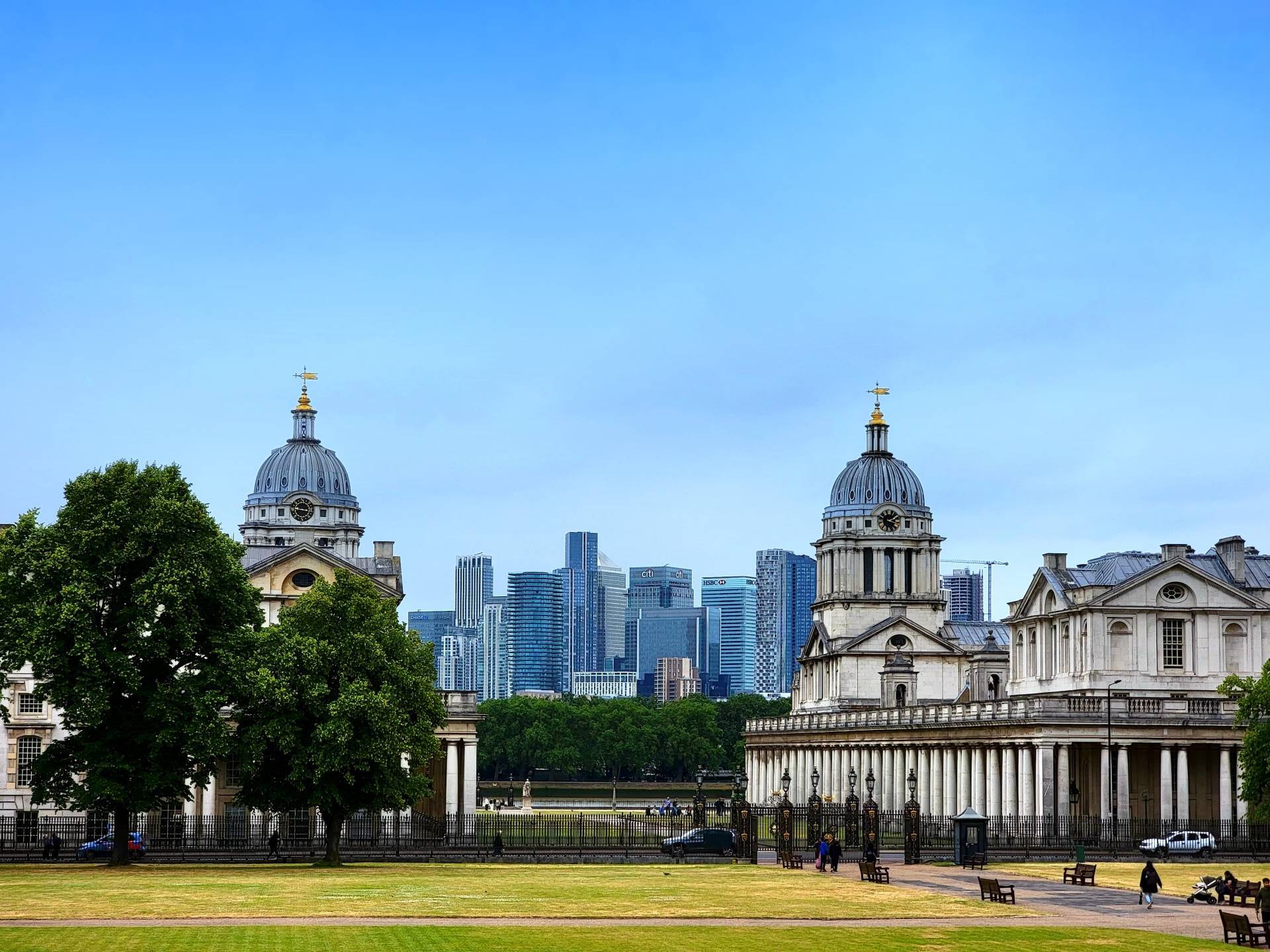

Greenwich Peninsula is the largest single regeneration project in central London, and it is being built on the site of what was once the largest gasworks in Europe — a works that grew to 240 acres and produced 400 million cubic feet of gas a day at its mid-1960s peak. Today the same loop of the Thames carries a consented masterplan of 17,487 homes across 150 acres, of which 3,479 are complete. It is one Jubilee line stop from Canary Wharf and two from London Bridge, and it is the only place in Zone 2 or 3 where a buyer can still purchase a new-build apartment with a direct river frontage for under half a million pounds.
The timing is the interesting part. London house prices fell 3.3 per cent in the year to July 2026 and flats were the weakest property type in England, down 2.3 per cent. Greenwich fell only 1.4 per cent over the same period — comfortably ahead of the capital — while the borough's private rents rose 6.1 per cent against London's 3.5 per cent. This guide sets our own Greenwich Peninsula inventory, which blends to £942 per square foot across eighteen active listings, against the resale market beneath it, and explains what that gap is actually measuring.
District Overview & Lifestyle
The peninsula is a loop of land roughly a mile across, wrapped on three sides by the Thames, and it is best read as a set of distinct quarters rather than a single place. Upper Riverside and the river path hold the towers with the direct water frontage, looking across to Canary Wharf. Peninsula Gardens and Parkview sit inland against the Central Park that runs the length of the peninsula's spine, which is where the family buyers are. Prime Point is the newer tower cluster closest to the station. South of all of it lies the Greenwich Peninsula Ecology Park, four acres of freshwater wetland that most Londoners do not know exists.
The anchor is The O2, the former Millennium Dome, converted into an indoor arena and used as a London 2012 venue. Around it sits the Design District, which opened in 2021 as London's first permanent, purpose-built home for the creative industries — sixteen buildings by eight architectural practices, let to studios at managed rents. The peninsula currently houses over 5,000 residents and draws more than three million visitors a year, which is an unusual ratio and the single most important thing to understand about living here.
Eating And Drinking
Honesty is more useful than flattery on this point: the MICHELIN Guide currently selects no restaurant anywhere in the Royal Borough of Greenwich, and the peninsula is not a fine-dining destination. What it has instead is volume and range — the restaurant strip inside The O2 running from chains to independents, the Design District's food hall, and the riverside bars along the Thames Path. For a starred dinner, Canary Wharf is one Jubilee stop north and Bermondsey four stops west; both are comfortably inside twenty minutes door to door. Buyers who want a neighbourhood restaurant culture on their doorstep should look at Greenwich town centre instead, fifteen minutes south.
Getting Around
North Greenwich on the Jubilee line opened in 1999 and remains one of the largest stations on the Underground, with a bus interchange built into it. Canary Wharf is one stop, London Bridge two, Waterloo four and Bond Street seven. The cable car crosses the river from beside The O2 to Royal Victoria Dock in the Royal Docks, built in the run-up to the 2012 Olympics. River bus services run from Greenwich Peninsula pier into the City and Westminster. The material change this cycle is the Silvertown Tunnel, which opened on 7 April 2025 and runs from North Greenwich beneath the Thames to Silvertown, carrying the new zero-emission Superloop SL4 express and the extended route 129. Buyers should note the tunnel is tolled, and that the previously free Blackwall Tunnel is now tolled at the same rates.
The Vibe
Candidly, the peninsula divides opinion, and the dividing line is event nights. On the roughly two hundred evenings a year when The O2 has a full arena, the streets around the station are busy in a way that no floor plan discloses; on the other nights the peninsula is quieter than almost anywhere else this close to central London. The river path, the Central Park and the ecology reserve give it a genuine amount of open space, and the demographic is young, international and professional rather than established. It is a neighbourhood still being finished — roughly one home in five of the consented masterplan is built — and buyers should price in a decade of adjacent construction as well as a decade of adjacent improvement.
Sales Market Analysis
The national backdrop is a market that has stopped falling but has not yet turned. England's average house price reached £293,000 in June 2026, up 1.8 per cent on the year, while London fell 2.5 per cent — the capital's tenth consecutive month of annual declines. By property type, flats and maisonettes were the weakest in England at minus 2.3 per cent, and new-build prices rose 3.1 per cent against 4.1 per cent for existing stock.
The pattern beneath those headlines matters more than the headlines. London's fall has been driven almost entirely by Inner London prime, where Westminster dropped 25.4 per cent and Kensington & Chelsea 14.7 per cent in the year to June 2026. Greenwich, with no exposure to the super-prime stock that drove those numbers, fell 1.4 per cent to an average of £463,000. Flats and maisonettes in the borough average £352,000. Set against a London average of £550,000 and a UK average of £273,000, Greenwich occupies a genuinely central position in the capital's price structure rather than a peripheral one.
The Greenwich Peninsula Micro-Market
District-level price data for a neighbourhood this new is thin, and it is worth saying so plainly rather than manufacturing precision. The best available resale benchmark puts Greenwich Peninsula flats at an average of £427,000, or £699 per square foot. Our own eighteen active listings in the district run from £380,000 to £1,412,500, with a median asking price of £600,000 and a blended rate of £942 per square foot across the seventeen for which the site publishes a reliable floor area — equivalent to £10,141 per square metre.
| Benchmark | Figure | What It Represents |
|---|---|---|
| Peninsula flats, resale | £699 | Average across the existing flat stock on the peninsula, 2026 |
| Polarius peninsula blend | £942 | Our 17 measured active listings, weighted by floor area |
| Greenwich flats, borough average | £352,000 | ONS average for flats and maisonettes, July 2026 |
| Greenwich, all property types | £463,000 | ONS borough average, July 2026 — down 1.4% on the year |
| London, all property types | £550,000 | ONS London average, July 2026 — down 3.3% on the year |
| Polarius peninsula range | £380,000–1,412,500 | Lowest and highest of our 18 active listings in the district |
Two readings follow. First, the 35 per cent gap between the resale average and our own blend is the price of new-build in a district where the new-build is overwhelmingly riverfront and the resale stock overwhelmingly is not; it is a premium for position and specification rather than for postcode alone. Second, and more usefully, the premium narrows as floor area grows. Our studio and one-bedroom stock prices between £883 and £985 per square foot, while the larger three-bedroom apartment at Prime Point works out at £859 — the lowest rate in the whole selection, in the largest conventional unit. A buyer optimising for space per pound should be looking at the three-bedroom floorplates, not the entry units.
Who Is Buying, And Why
The buyer base here splits three ways. First-time and second-step London buyers take the studios and one-bedrooms, drawn by a Zone 2 and 3 Jubilee address at a price that no comparable riverfront postcode offers. Domestic and international investors take the one- and two-bedrooms, attracted by a rental market that is demonstrably outrunning the capital: Greenwich private rents averaged £1,995 a month in August 2026, up 6.1 per cent on the year, against London's 3.5 per cent and England's 3.9 per cent. Flats and maisonettes in the borough let at £1,831 a month, some 31 per cent above the England-wide average of £1,400, and that demand is year-round employment demand from Canary Wharf and the City rather than anything seasonal. Third, and increasingly, owner-occupier families take the park-facing two- and three-bedroom units at Parkview and Peninsula Gardens.
The structural argument is supply with a known end date. The masterplan commits to 17,487 homes, of which 4,896 are affordable — 30 per cent by habitable room, with 37 per cent delivered to date, built out by Knight Dragon in partnership with the Greater London Authority and completing in 2035. Just under one home in five is finished. That is simultaneously the risk and the case: a buyer today accepts years of adjacent construction, and in exchange buys into a neighbourhood whose amenity, population and transport are all still improving on a published timetable rather than a speculative one.
Strategic Verdict
Greenwich Peninsula is the clearest example in London of a district whose price has been dragged down by a market it does not belong to. The capital's 3.3 per cent annual fall is an Inner London prime story, and the peninsula has no prime exposure whatever; Greenwich's own 1.4 per cent decline, against rents rising at 6.1 per cent and transaction volumes up 59.5 per cent, describes a market that is functioning normally while the headline number says otherwise.
Our reading of current pricing is that the larger floorplates are the better value. The three-bedroom apartment at Prime Point prices at £859 per square foot against £985 for a studio in the same building — the inverse of the usual relationship, and a meaningful arbitrage for a buyer who needs the space. The riverfront premium is real and defensible at roughly £1,080 per square foot for direct water frontage, but it should be bought for the view and the resale narrative, not on the assumption that it compounds faster than the inland stock.
The caution is specific rather than general, and it is not the market: it is the building programme. Four homes in five in this masterplan do not yet exist. Buyers should establish what is consented immediately adjacent to any unit they are considering, and should visit on an event night at The O2 as well as on an ordinary Tuesday.
Featured Local Properties
Six active Polarius listings on Greenwich Peninsula, spanning the district's full range from a river-view studio at £415,000 to a three-bedroom penthouse at £1,412,500.
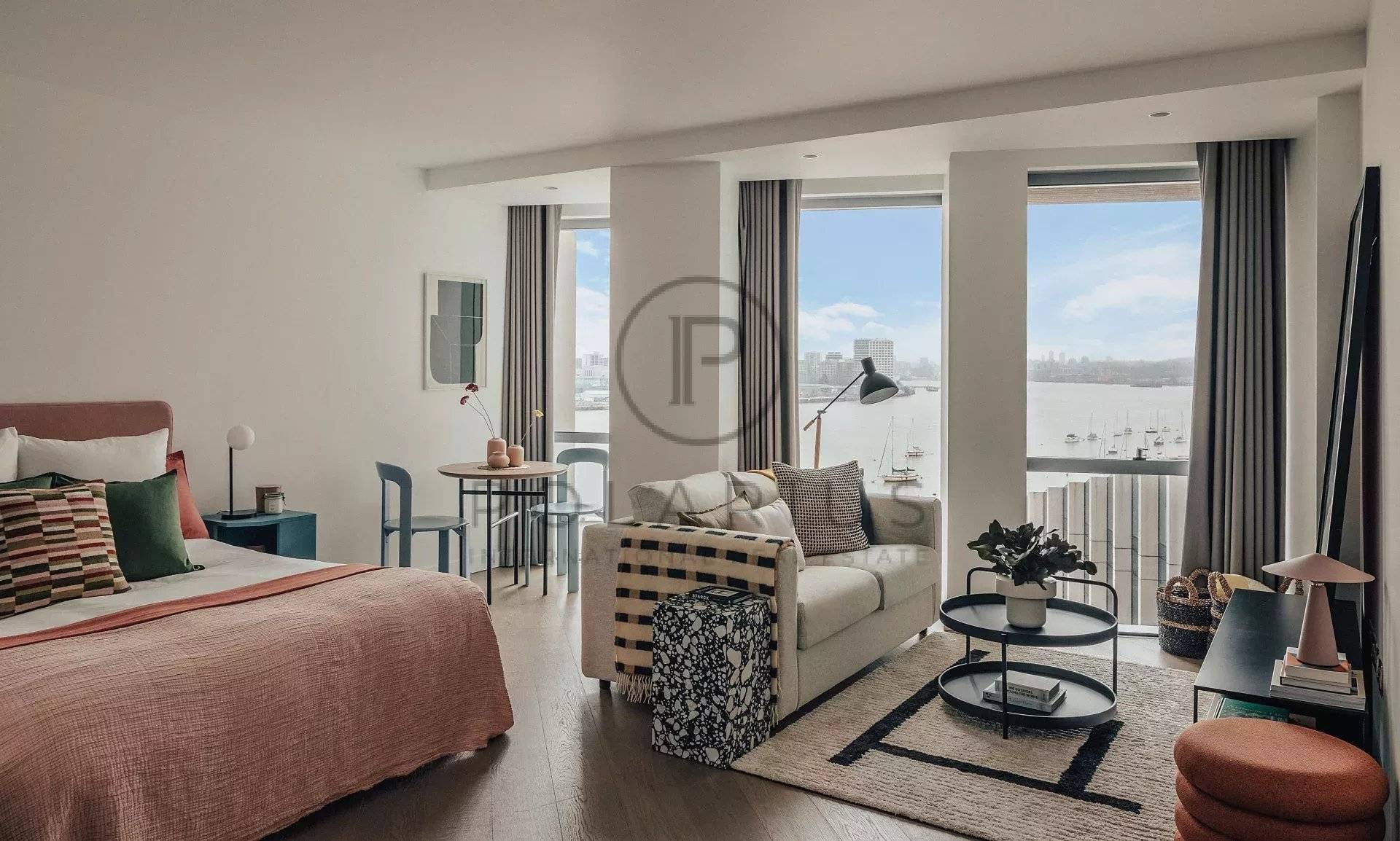
Greenwich Peninsula
The District's Entry Point
A first-floor studio with partial Thames views and floor-to-ceiling glazing, at £984 per square foot — the lowest ticket on the peninsula in our inventory.
View Property →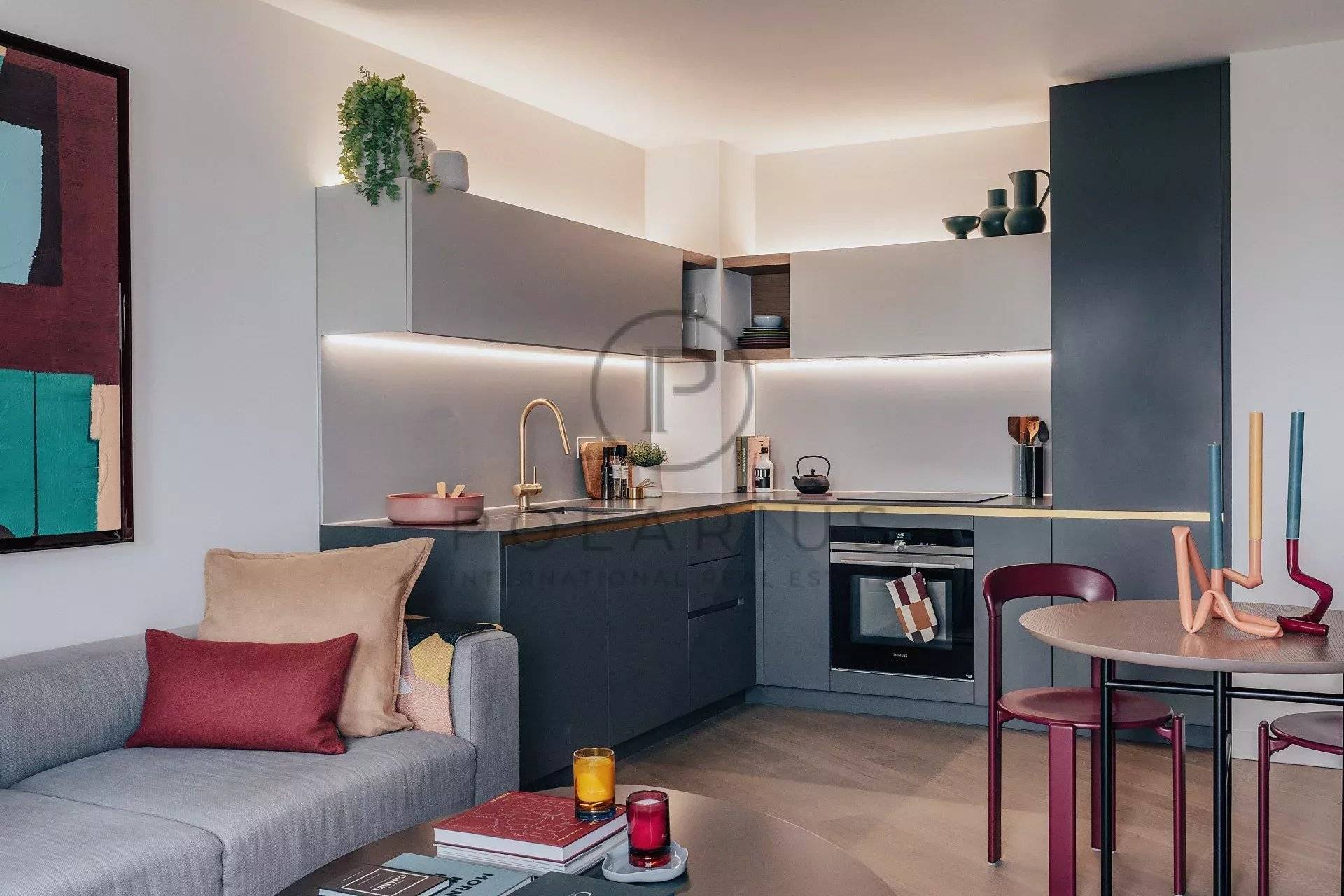
Third Floor
Park-Facing, Walk To The Jubilee Line
£891 per square foot, set against the Central Park spine and minutes from North Greenwich station. The standard one-bedroom proposition here.
View Property →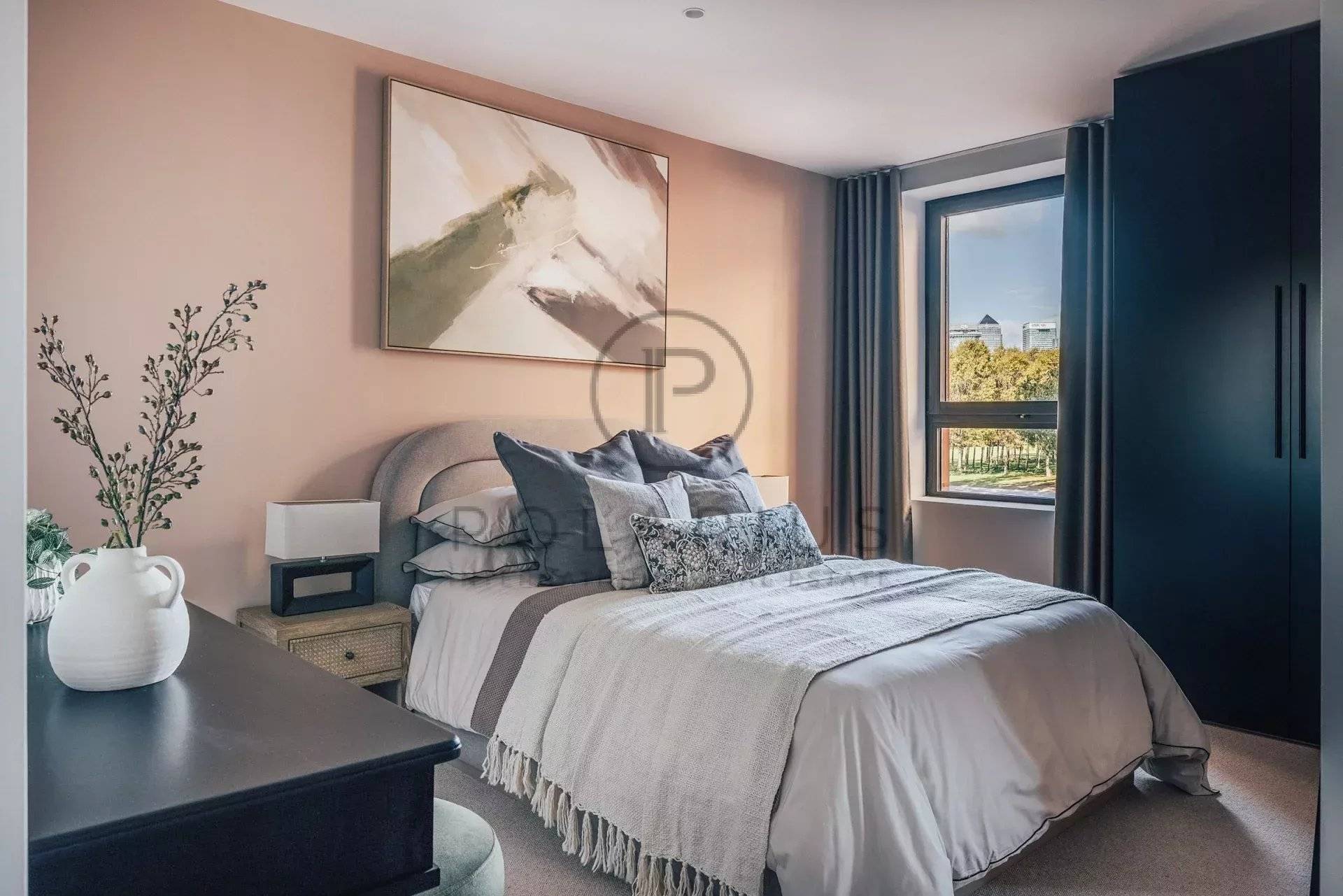
Peninsula Gardens
Open-Plan Two-Bed With Private Outside Space
£879 per square foot, with 24-hour concierge, gym and landscaped gardens. A principal bedroom with ensuite and a balcony or terrace.
View Property →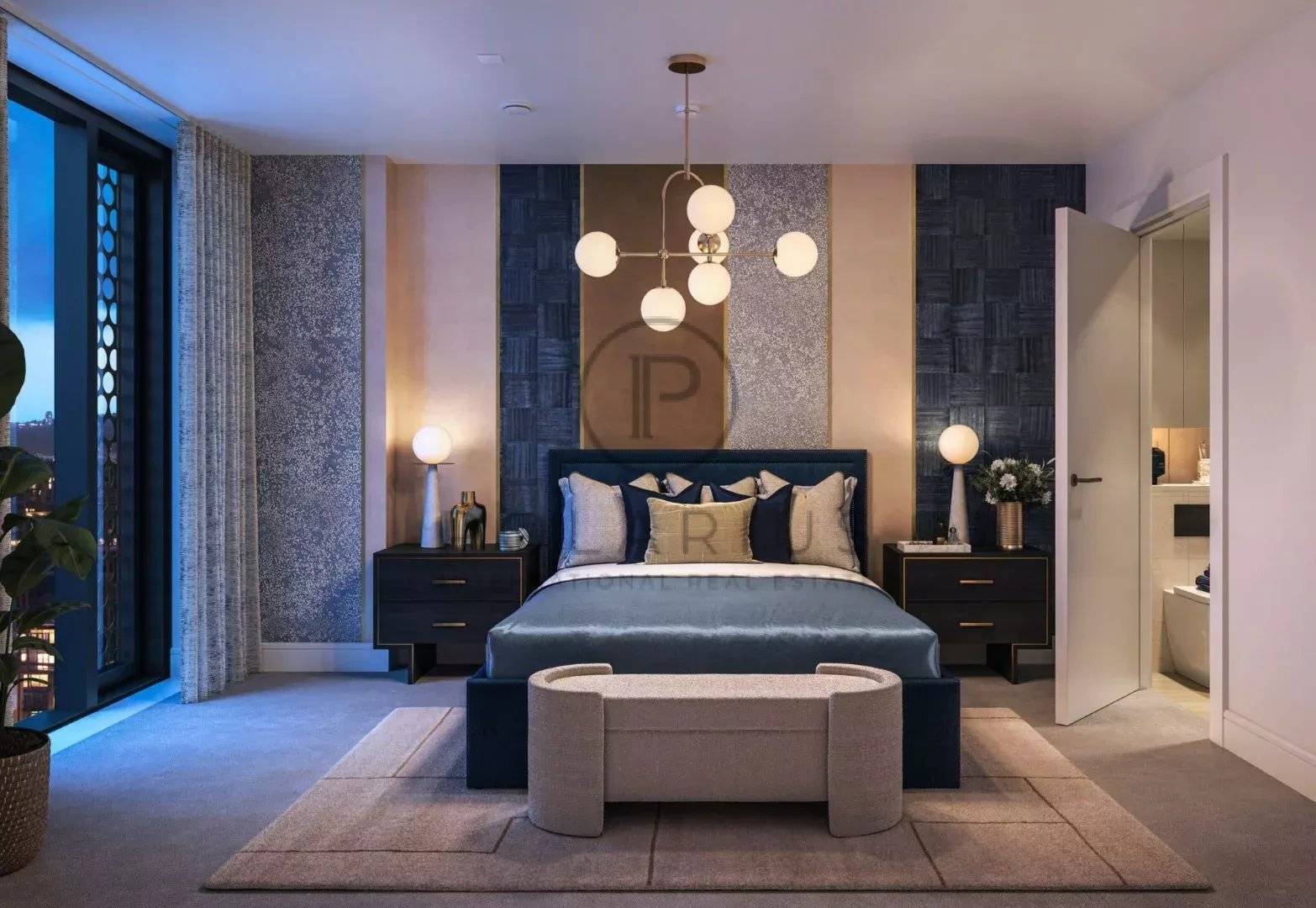
Greenwich Peninsula
Best Rate Per Square Foot In This Selection
At £859 per square foot this is the cheapest space in the whole group despite being the second-largest unit — the clearest value in our peninsula stock.
View Property →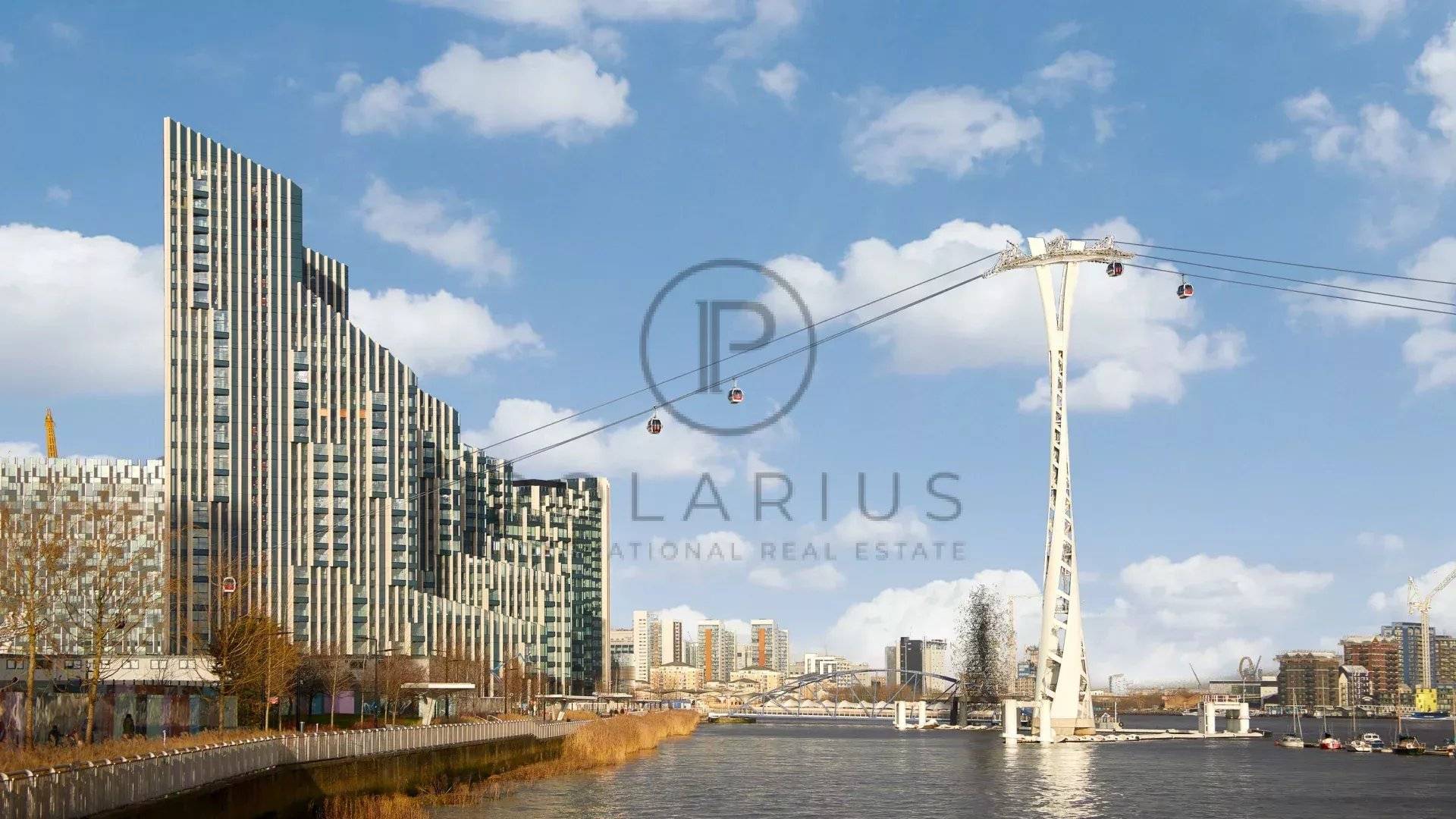
Greenwich Peninsula
Thames Frontage Facing Canary Wharf
£1,082 per square foot buys the view across the river to the Canary Wharf towers. This is what the riverfront premium costs in practice.
View Property →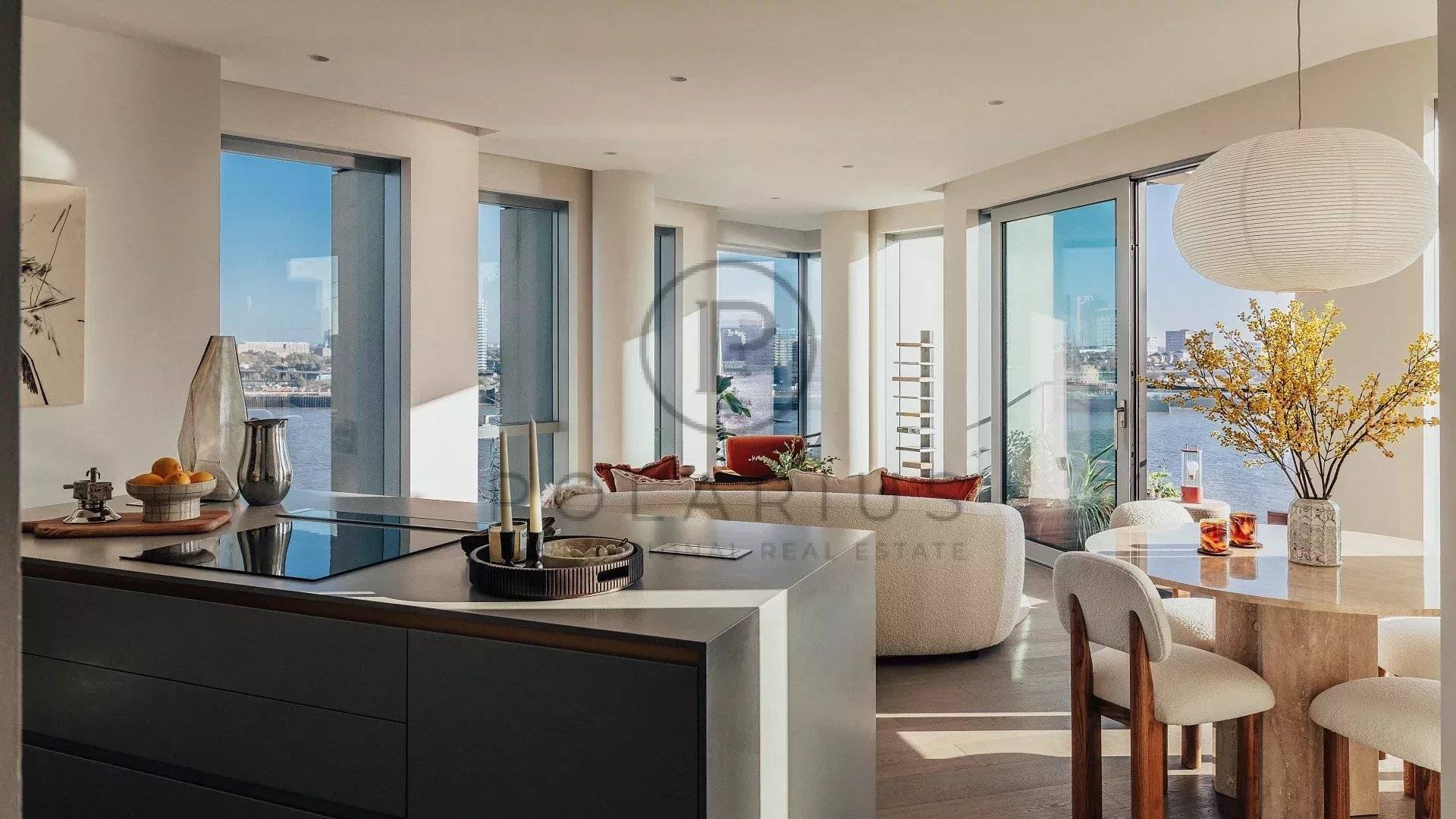
Greenwich Peninsula
Largest Floorplate In Our Peninsula Stock
134 square metres over the river at £979 per square foot — the top of the district and still below the riverfront two-bed rate.
View Property →