25 June 2026

Renting vs Buying on the French Riviera: The Summer Calculation

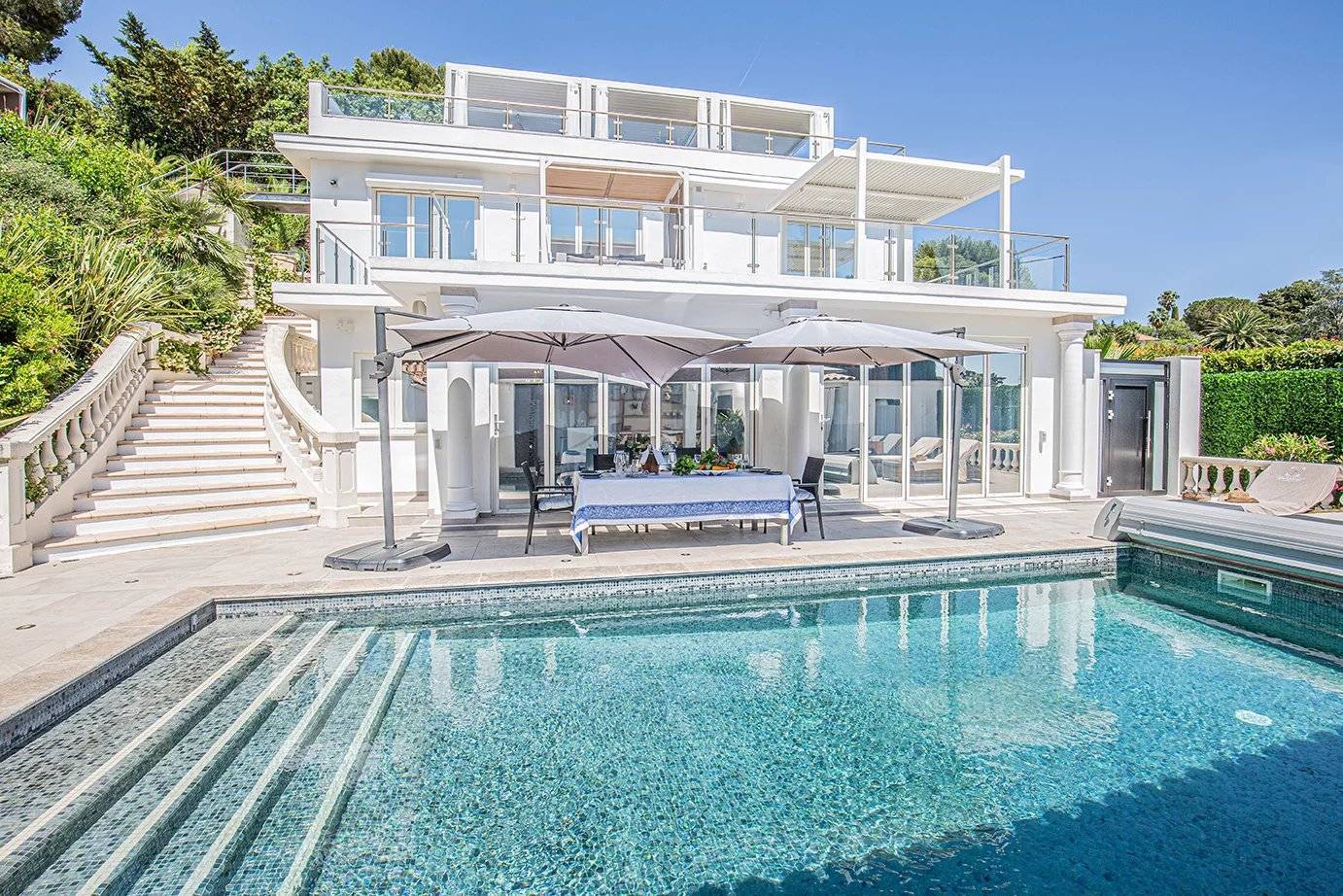
Luxury villa with private pool and sea views on the French Riviera — renting vs buying on the Côte d'Azur, Polarius Market Insights 2026
Market Insights  ·  French Riviera

Renting vs Buying on the Côte d'Azur: The Summer Calculation

If you've spent another summer renting on the Riviera, the question is inevitable. What would it actually cost to own? We run the numbers — honestly, and in full.

By Rhodri Ellis Owen | June 2026 | 8 min read
Peak-week rental rate
€25k – €170k
Acquisition costs on top of price
7 – 9%
Typical break-even horizon
8 – 12 years

What the rental market actually costs

The Riviera rental market is one of the most stratified in Europe. Price, far more than on the sales side, is determined by the combination of location, week, and property character — and the spread is substantial.

LocationProperty typePeak-week rate (July–Aug)Monthly equivalent
Saint-Tropez / Ramatuelle5–7 bed villa, pool€25,000 – €150,000€100k – €600k
Cap d'Antibes6–8 bed estate, sea access€50,000 – €120,000€200k – €480k
Saint-Jean-Cap-Ferrat5–6 bed villa, gardensRates on request
Cannes / La Californie4–5 bed villa, panoramic views€15,000 – €60,000€60k – €240k
Nice / Mont Boron3–4 bed villa or penthouse€10,000 – €35,000€40k – €140k

Peak season runs June through September, with July and August commanding the highest rates. The most desirable properties are typically reserved six months in advance, and the best addresses in Saint-Jean-Cap-Ferrat or Cap d'Antibes rarely reach the open market. For a family spending four weeks per summer on the Riviera at mid-tier luxury, a total annual rental outlay of €80,000–€150,000 is a realistic baseline.

The cost of buying: the number beyond the asking price

Acquisition costs in France are among the most significant in Western Europe, and they are borne entirely by the buyer. The headline figure is the frais de notaire — commonly referred to as notary fees, though the majority of the amount flows directly to the French state as transfer tax (DMTO) rather than to the notary. Our complete guide to buying property in France covers every step of the legal and financial process in detail.

Acquisition cost model
Example: €5M resale villa, Cannes area
Purchase price
€5,000,000
Frais de notaire (approx. 7–8%)
Includes DMTO transfer tax (~5%), notary emoluments, and disbursements
€350,000 – €400,000
Agency fees (if applicable)
Typically 3–5% buyer's side, where not included in price
€0 – €250,000
Currency conversion (non-euro buyers)
Broker spread typically 0.5–1.5% on large sums
€25,000 – €75,000
Total acquisition cost
€5.37M – €5.72M

For new-build and off-plan properties, the notary fee component falls significantly — to approximately 2–3% — because transfer taxes are calculated differently. If you are considering a recently completed development rather than an existing property, this distinction alone can represent a saving of €200,000 or more at the €5M price point.

The cost of ownership: what the purchase price doesn't include

Once acquired, a Riviera property carries annual costs that are often underestimated — particularly by buyers who have previously only experienced the market as renters, where all operational costs are absorbed by the owner.

Annual ownership costs
Indicative figures for a €5M villa
Taxe foncière (land tax)
Varies by commune and property size; luxury villas typically €8,000–€25,000
€8,000 – €25,000
IFI — Impôt sur la Fortune Immobilière
Applies to net property assets above €1.3M for French tax residents. Rate 0.5–1.5%.
Variable
Building & contents insurance
€5,000 – €15,000
Pool & garden maintenance
Year-round contract; seasonal staff extra
€12,000 – €30,000
Property management / caretaking
For non-resident owners; full-service management typically 5–10% of property value
€15,000 – €40,000
Utilities (year-round)
€8,000 – €20,000
Total annual running costs (excluding IFI)
€48,000 – €130,000

IFI deserves particular attention for buyers who intend to become French residents, or who already hold significant French property. The wealth tax applies to net real estate assets above €1.3 million at rates between 0.5% and 1.5%, and is calculated annually. On a €5M property with modest leverage, this could represent €30,000–€60,000 per year. Non-residents are also subject to IFI on their French property holdings. The advice of a French tax adviser is not optional at this level of the market.

"The buyers who are best positioned are not those with the largest budget — they are those who have modelled the full cost of ownership before, not after, they fall in love with a property."

The break-even calculation

At what point does ownership become cheaper than renting the equivalent property? The answer depends on three variables: the total acquisition cost, the annual rental saving, and the assumed rate of capital appreciation.

Break-even illustration
The 10-year horizon for a €5M acquisition

Assume a €5M purchase (total acquisition cost ~€5.5M), annual running costs of €80,000, and an annual rental saving of €120,000 (reflecting four weeks at €30,000/week). The net annual ownership saving over renting is approximately €40,000. At that rate, the carrying premium from acquisition costs alone takes around 12–13 years to recoup — before accounting for capital appreciation. On the French Riviera, where prime property has historically appreciated 3–5% annually in benign conditions, the calculus shifts materially: at 4% per year, a €5M property generates notional equity of €200,000 in year one alone. For buyers with a horizon of 10 years or more and a conviction that they will use the property annually, ownership typically becomes the stronger financial position by year 8–10.

When renting wins

The financial case for continued renting is strongest in three scenarios. First, where summer use is irregular — if you expect to spend some years elsewhere, the annual rental saving shrinks and the break-even extends significantly. Second, where flexibility has financial value — the Riviera is a market where tastes shift and micro-locations evolve; owning the wrong address can be more costly than renting the right one. Third, where the acquisition budget would otherwise be deployed in higher-yielding assets — for buyers with alternatives returning 6–8% annually, the implied cost of tying up €5M in bricks and mortar is substantial.

When buying wins

Ownership makes its strongest case for buyers who use the property consistently — four or more weeks annually, ideally year-round — and who are selecting an address with genuine scarcity value. Saint-Jean-Cap-Ferrat, Cap d'Antibes, and the best positions in Saint-Tropez are subject to planning constraints and finite supply that underpin long-term values regardless of broader market conditions. You can browse our current French Riviera properties for sale — including a number held off-market — to understand what genuine scarcity addresses look like at this level of the market.

The case for renting
No acquisition costs (7–9% on entry)
Full flexibility to change location, size, or address year on year
Zero exposure to French IFI wealth tax
No property management obligations for a non-resident
Capital remains liquid and deployable elsewhere
Access to the finest properties without long-term commitment
The case for buying
Rental expenditure converts to equity rather than disappearing entirely
Exposure to Riviera capital appreciation (historically 3–5% in prime locations)
Freedom to customise, furnish, and use at will with no constraints
Rental income potential during weeks the owner is not in residence
Inheritance planning advantages through structured ownership (SCI)
Access to the very best off-market properties, which rarely appear as rentals

A note on rental income

For buyers who do not intend to occupy the property year-round, rental income can materially change the ownership calculation. A well-positioned Riviera villa generating €200,000–€400,000 in gross seasonal rental income effectively eliminates annual running costs and, in stronger years, contributes positively to the total return. Our French Riviera seasonal rental portfolio gives a clear picture of current demand and achievable rates across key locations. The practical and regulatory requirements are not trivial — French tax treatment of rental income, the mandatory registration of seasonal lets in some communes, and the costs of professional rental management all require planning — but for buyers who approach it systematically, the numbers can be compelling. At Polarius, we regularly advise on structured acquisition for clients who intend to combine personal use with a managed rental programme.

The honest conclusion

The mathematics of renting versus buying on the Côte d'Azur does not resolve cleanly in either direction — and any adviser who tells you it does is selling you a conclusion rather than an analysis. What the numbers do support is this: for buyers with a minimum ten-year horizon, consistent summer use, and the appetite to engage seriously with French tax and ownership structures, acquisition at the right address remains one of the most defensible capital allocations available in the European luxury market. For those with a shorter horizon, irregular use, or higher-returning alternatives for their capital, renting at the highest level remains a perfectly rational choice — and on the Riviera, the rental market's quality makes it a genuinely excellent one.

The question is not which is objectively better. The question is which is better for you, now, given what you know about how you use the Riviera and what you expect to do with it over the next decade.

Browse Riviera properties for sale

Our France portfolio spans the full coastline — from Cannes and Cap d'Antibes to Saint-Jean-Cap-Ferrat and Saint-Tropez. Many listings are held off-market and available on private request.

View properties for sale

Explore seasonal villa rentals

Not ready to buy? Our curated Riviera rental collection — from Saint-Tropez to Saint-Jean-Cap-Ferrat — offers the finest seasonal properties, many available only by private request.

View rental villas

Guide to buying property in France

From notary fees and transfer taxes to the compromis de vente and beyond — our step-by-step guide covers every stage of the French acquisition process for international buyers.

Read the guide

Figures cited are indicative and based on market data current at time of publication (June 2026). Acquisition costs, tax rates, and rental values vary by property, location, and buyer profile. This article does not constitute financial, tax, or legal advice. Readers are encouraged to seek independent counsel before making acquisition decisions.
Back

The latest press articles

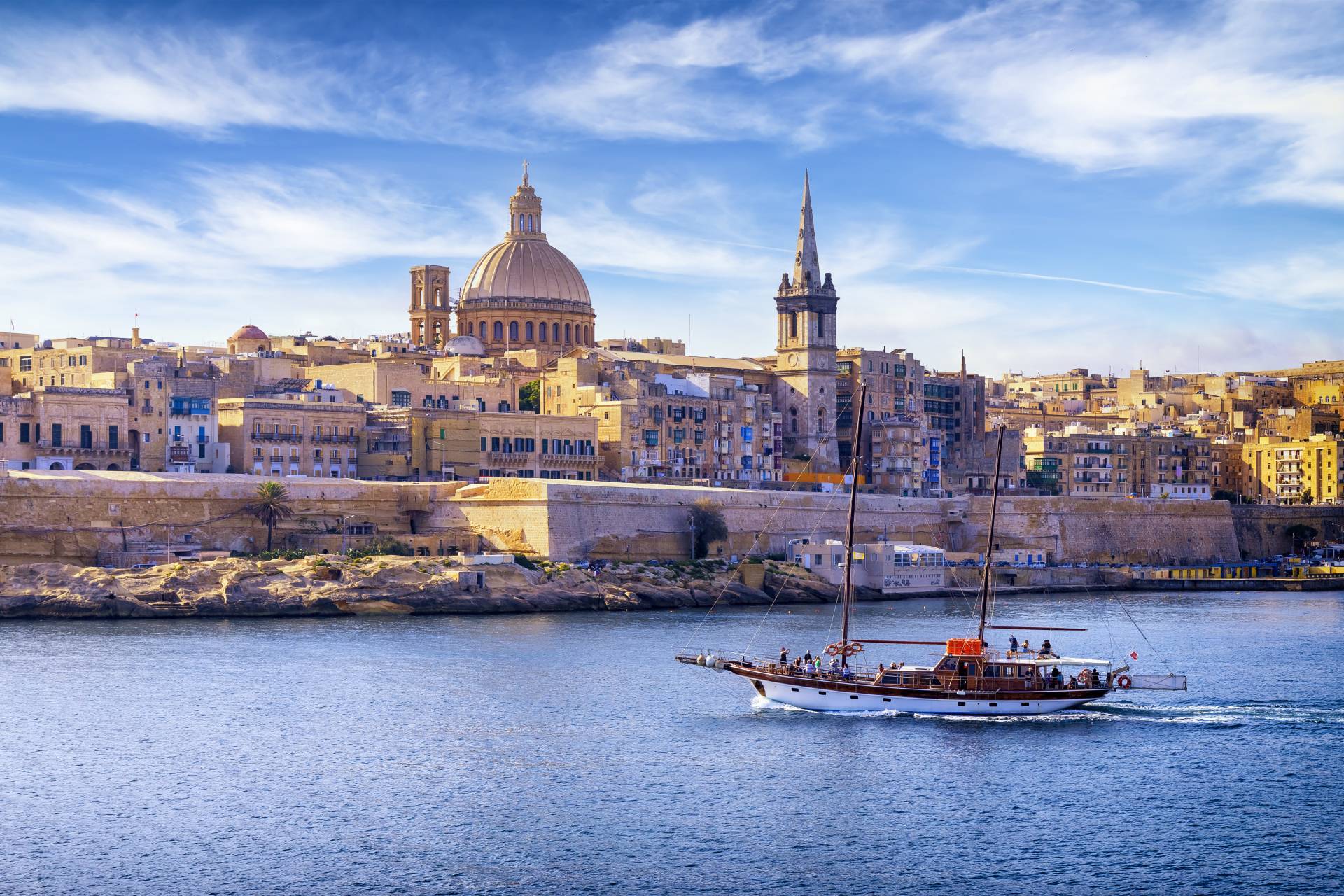
  • Luxury penthouse in Malta sold to UK buyers amid global uncertainty, showcasing Malta’s resilient property market

    Malta Property Market 2026: Resilience, Prices & Why UK Buyers Are Still Buying

    March marks Malta’s Independence and Freedom Day - a reminder of the island’s political stability and enduring appeal to international investors. Even amid global uncertainty, Malta’s property market remains resilient, attracting high-value buyers, as demonstrated by the recent sale of a luxury penthouse to UK investors.

    Read more
  • Geopolitical uncertainty and global property investment trends influencing safe-haven real estate markets

    Safe-Haven Property 2026: Why HNW Investors Are Choosing Monaco and UAE Over Traditional Markets

    How political instability is reshaping international property investment — and why Monaco and the UAE are emerging as long-term safe-haven destinations for global capital.

    Global real estate markets are entering a period where geopolitics is no longer a background consideration, but a primary driver of investment behaviour. Beyond interest rates and inflation, political stability, legal certainty and jurisdictional security are increasingly shaping where international buyers choose to deploy capital.

    Political unpredictability in the United States, including abrupt policy signals and election-driven volatility, ongoing conflict in Eastern Europe, and rising geopolitical tensions around strategic regions such as Greenland have reinforced a more cautious and selective investment mindset among high-net-worth individuals and family offices.

    In this environment, premium real estate is increasingly viewed as a safe-haven allocation — not purely for yield, but as a mechanism for long-term capital preservation, diversification and protection against geopolitical risk.

    Read more
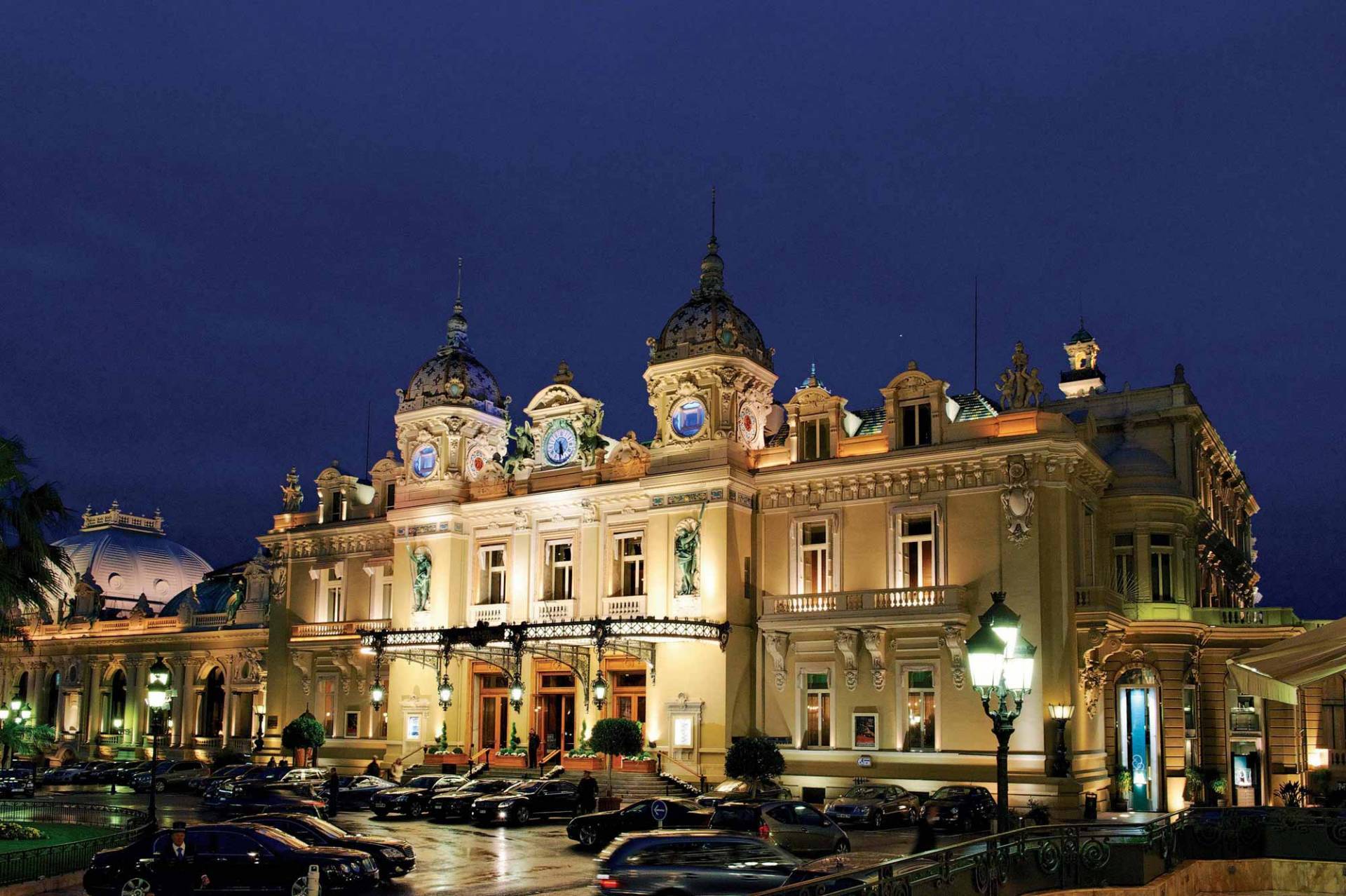
  • Monte Carlo Casino in Monaco, a landmark at the centre of the ultra-prime Monaco luxury property market

    Monaco Luxury Real Estate 2026: Has the Principality Lost Its Gloss - Or Is This a Strategic Reset?

    For years, Monaco luxury real estate has appeared almost untouchable. Prices per square metre have set European benchmarks, demand has consistently outpaced supply, and the Principality’s reputation as a secure wealth jurisdiction has shielded it from wider volatility. Yet in 2026, a more deliberate pace defines the market.  Deals are progressing, but without the urgency that characterised the post-pandemic surge. Negotiations are firmer. Buyers are more forensic. 

    Has Monaco lost momentum - or is the world’s most expensive property market entering a more disciplined era?

    Read more
  • Exterior of 5 & 7, a boutique hotel for sale in Roujan, Southern France

    LGBTQ Resort & Hotel Investments in Europe: Why Boutique Hospitality in Southern France Is Emerging as a Strategic Opportunity

    Explore two character-driven hospitality properties for sale in Occitanie — 5 & 7 in Roujan (Hérault) and a former gay chambres d’hôte in Ambax, Haute-Garonne — positioned within Europe’s growing LGBTQ travel market.

    Read more
  • Big Ben and the Palace of Westminster seen from a prime London street, symbolising London’s global status and heritage architecture

    Why London Remains a Top Five Global City for Prime Property Investment in 2026

    Despite global economic uncertainty and more selective buyer behaviour, London real estate continues to stand out as one of the world’s most resilient and internationally sought-after prime residential markets. Demand is not disappearing — it is becoming more focused, more value-driven, and increasingly concentrated in London’s strongest neighbourhoods.

    Read more
  • Ransome's Wharf Battersea: modern waterside apartments near the Thames

    Ransome's Wharf Battersea: Waterside Living in One of London's Most Sought-After Addresses

    Imagine waking up just steps from the Thames, in a historic dockside setting that blends calm waterside living with the energy of London at your doorstep.

    Ransome's Wharf in Battersea offers a rare opportunity to own a home where city life and tranquility coexist effortlessly

    Read more
  • Aerial view of Saint-Jean-Cap-Ferrat on the French Riviera, showing a lush peninsula surrounded by the Mediterranean Sea, luxury villas and yachts, with text introducing off-market real estate and hospitality assets.

    What Are Off-Market Properties?

    A discreet route to acquiring the world’s most prestigious real estate and hotel assets

    In the upper tiers of global real estate, many of the most exceptional opportunities are never publicly advertised. Commonly referred to as off-market listings, off-market properties or off-market real estate assets, these assets are sold quietly, privately, and often only shared with a very select group of qualified buyers.

    At Polarius International Real Estate, off-market transactions form a core part of what we do. Increasingly, this includes off-market hotel assets, alongside ultra-prime residential estates and strategic investments worldwide. From discreet villas on the Côte d’Azur to landmark hospitality assets, our role is to act as a trusted gateway to opportunities that simply do not appear on public portals.

    Read more
  • Luxury branded Mercedes Benz residences in Dubai

    Branded Residences: A Global Trend or a Maturing Investment Asset Class?

    Branded residences have evolved from a niche extension of luxury hospitality into a recognised global real estate asset class. Once concentrated in resort destinations and ultra-prime city centres, they are now appearing across a wider range of international markets, attracting investor interest from the Middle East, Europe, and Asia-Pacific.

    For investors, the key question is no longer whether branded residences are here to stay, but where branding genuinely enhances long-term value, liquidity, and exit potential.

    Read more
  • Luxury seasonal rental villa with private pool on the French Riviera, Mykonos or Ibiza — Polarius International Real Estate

    Luxury Seasonal Rentals — French Riviera & Monaco | Ibiza | Mykonos

    The luxury seasonal rental market across the French Riviera and Monaco, alongside select ultra-prime destinations such as Ibiza and Mykonos, continues to be defined by scarcity, discretion and experience-led demand.

    Read more
  • Global luxury real estate investment map showing prime markets in UAE, Mediterranean and UK for high-net-worth buyers 2026

    Polarius Global Property Index 2026

    Where High-Net-Worth Buyers Are Buying in 2026 (And Why): UAE vs Mediterranean vs UK

    A New Phase For The Global Real Estate Market

    The global real estate market has entered a new era shaped by international property investment and increasingly sophisticated global property investment strategies. In the luxury property market of 2026, buyers are no longer asking where prices are rising fastest — they are asking where HNWIs are buying to protect capital, secure lifestyle and build a resilient global property portfolio.

    Family offices, private investors and internationally mobile entrepreneurs are prioritising wealth preservation properties across multiple jurisdictions rather than concentrating risk in a single country. This is the defining trend behind modern family office real estate strategies, and it is why Polarius operates as a multi-country real estate platform rather than a local agency.

    Read more

This site is protected by reCAPTCHA and the Google Privacy Policy and Terms of Service apply.