
The Off-Market Shift: European Luxury Hotel Investment in 2026
Why the most consequential European hotel transactions of 2026 will never appear in a press release — and what institutional capital, family offices and sovereign funds need to know about accessing them.


Key Takeaways
- European hotel investment reached €14.65 billion across 267 transactions in 2025 — the strongest year since 2019, with France, the UK, Spain and Germany capturing approximately two-thirds of total volume.
- Off-market trophy activity is intensifying. Luxury assets averaged €107.6 million per transaction in 2025 with selectivity increasing — and the largest 2026 deals to date, including assets exceeding €440 million, have moved under exclusivity rather than open marketing.
- Capital composition is broadening. Family offices, sovereign wealth funds and specialist hospitality private equity are increasingly competing for the same generational assets — placing a premium on discreet, mandated access rather than open process.
The Off-Market Shift
For much of the post-pandemic recovery, European hotel investment activity was characterised by openly marketed processes — published teasers, structured information memoranda, broker-led auctions. That model is now being quietly displaced, particularly at the upper end of the market.
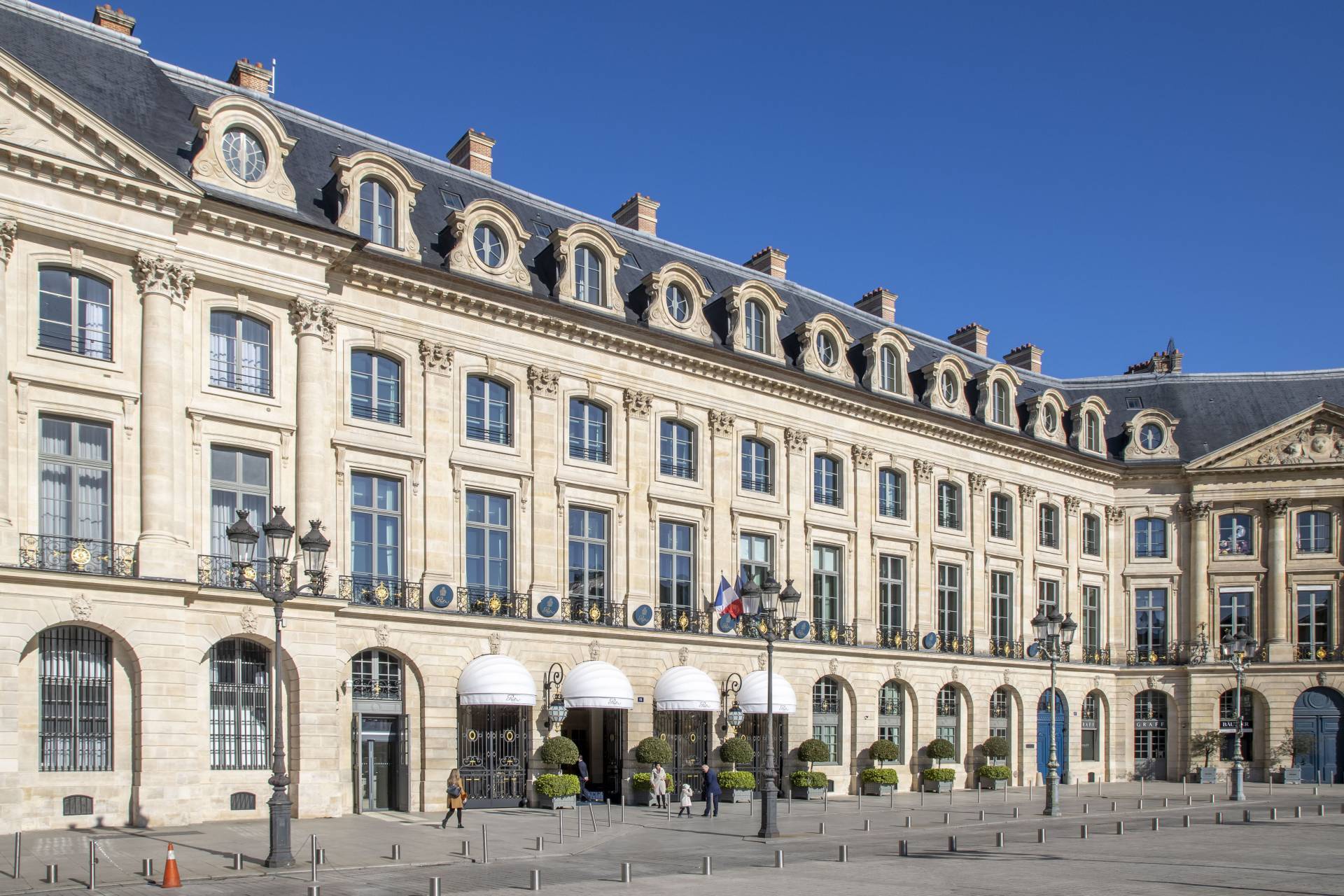
The pattern is most pronounced in the trophy segment. Of the largest European hotel transactions announced in early 2026, the most consequential — including a Parisian landmark reported to be exchanging hands under exclusivity at approximately €447.6 million, or close to €1 million per key — were not openly marketed. They were placed discreetly, intermediated through closed networks, and concluded with a single qualified buyer.
There are several reasons for this shift. Vendors of generational assets — flagship properties in Paris, London, Madrid, Milan and the South of France — are increasingly reluctant to expose pricing expectations to the wider market. A failed open process at €500 million carries reputational and valuation consequences that vendors of irreplaceable assets are unwilling to underwrite. Equally, the buyer pool for assets at this scale is narrow enough that a discreet, mandated approach typically reaches the relevant capital more efficiently than an open process.
At the institutional end of the European hotel market, the question is no longer whether the right buyer exists. It is whether the seller can reach them without compromising the asset's narrative.
For investors, the implication is straightforward. Genuine trophy opportunities now circulate primarily through intermediaries with direct vendor mandates and an established institutional buyer network. Capital deployed through generalist channels is increasingly seeing only what has already been declined elsewhere.
2025 in Numbers — A Market Returning to Discipline
The headline figures for 2025 confirm a European hotel sector that has matured into a fully institutional asset class. According to Global Asset Solutions' European Hotel Transactions Report, the EMEA market recorded 267 transactions, representing €14.65 billion in volume and 45,052 keys traded. The average transaction size sat at €54.9 million, with assets clearing at approximately €325,000 per key.
Capital deployment remained above €3.4 billion in every quarter of 2025, a pattern that reflects structural demand rather than opportunistic surges. The market's geographic concentration is striking: France, the UK, Spain and Germany together accounted for approximately €9.61 billion, or 66% of total European transaction volume. This concentration reflects both liquidity preferences and the scarcity of institutional-grade product outside the major gateway cities.
Segmentation matters. The Upscale category led overall activity with 132 transactions totalling €7.66 billion at an average of €58 million. The Luxury segment recorded 34 transactions worth €3.66 billion — fewer deals, but at an average size of €107.6 million, more than double the Upscale equivalent. The Luxury market is becoming less liquid and more selective, but per-key pricing remains exceptional.
| Segment | Transactions (2025) | Volume | Avg. Deal Size |
|---|---|---|---|
| Luxury | 34 | €3.66 billion | €107.6 million |
| Upscale | 132 | €7.66 billion | €58.0 million |
| Midscale & Economy | 101 | €3.33 billion | €33.0 million |
| Total EMEA | 267 | €14.65 billion | €54.9 million |
Crucially, European transaction volumes still sit at approximately 60% below their pre-Covid peak. For institutional capital with five-to-ten-year horizons, the gap between current activity and the historical baseline represents a multi-year runway of sustained recovery — provided the right assets can be sourced at the right basis.
Capital Composition — Who Is Buying
The investor base deploying capital into European hotels in 2026 is broader and more sophisticated than at any point in the cycle. The composition has shifted meaningfully from the era when generic core institutional money dominated open-market transactions.
Real Estate Funds and Hospitality-Specialist Private Equity
Pan-European and global real estate funds remain the largest category of capital by volume, but their behaviour has become more disciplined. Hospitality-specialist private equity firms — including platforms with dedicated European mandates and significant dry powder — are increasingly competing for the same upscale and value-add stock. According to JLL's 2026 Global Hotel Investment Outlook, global hotel direct investment rose 22% from its 2023 trough, with cross-border capital accelerating into UK and European markets.
Family Offices — Increasingly Institutional
The most significant evolution has been at the family office end of the market. European family offices are no longer the passive custodians of legacy wealth — they have institutionalised, with average private equity allocations now reaching roughly 27% of portfolio. The continent is home to over 2,000 single family offices, with that number expected to grow further in 2026. According to industry reporting from Hospitality Investor, high-net-worth and family office capital accounted for approximately 14% of US hotel deals in H1 2025 — a more-than-tenfold increase on a decade earlier. The European trend mirrors this trajectory.
This matters operationally. Family offices targeting hotel assets in 2026 are running investment committees, conducting institutional-grade due diligence, and competing on speed and certainty of execution. Vendors are increasingly comfortable trading directly with them.
Middle Eastern Sovereign and Institutional Capital
Sovereign wealth funds and quasi-sovereign institutional vehicles from the Gulf — particularly UAE-headquartered and Qatari capital — remain among the most decisive buyers of European trophy hospitality assets. Their preference for irreplaceable, generational positioning aligns naturally with the supply characteristics of the European luxury market. These buyers typically transact off-market, often through mandated intermediaries, and prioritise long-hold strategies over short-term value extraction.
North American, Asia-Pacific and Indian Capital
North American buyers were the largest net portfolio acquirers in 2025, recording net portfolio acquisitions of €599 million according to the HVS European Hotel Transactions Report. Asian and Indian capital — particularly from active conglomerates and listed hospitality groups — is increasingly visible in European processes, often via European subsidiaries or specialist intermediaries.
Where Capital Is Going — Gateway by Gateway
The geographic dispersion of European hotel capital in 2026 continues to favour gateway cities with deep liquidity, irreplaceable positioning and proven international demand drivers.
London — Recalibration, Not Retreat
London's hotel performance in 2025 was a story of two halves. Full-year occupancy reached 82.5%, an uplift of 1.2 percentage points on the previous year, but Average Daily Rate (ADR) declined 2.5% across the first six months before recovering in H2. According to industry reporting, full-year RevPAR growth ended at 1.5% in London. Investor confidence has rebuilt accordingly: Property Week reported approximately £100 million of London assets confirmed to launch in early 2026, alongside repurchase activity at the trophy end.
The 2025 influx of new luxury supply — approximately 757 new five-star rooms across the capital — has compressed pricing power at the upper end. For acquirers, this presents an entry-point opportunity in a market where the supply pipeline beyond 2026 is materially constrained. Polarius International Real Estate is currently authorised on a generational trophy mandate in core Central London, combining hotel and private residential components — available to qualified institutional and family office buyers under NDA and proof of funds.
Paris — Continued Trophy Liquidity
Paris remains the deepest market in Europe for trophy hotel transactions. Early 2026 has seen a Parisian landmark exchanging hands under exclusivity at approximately €447.6 million, representing close to €1 million per key. STR/CoStar's February 2026 forecast noted that Paris luxury and upper-upscale segments received the second-largest RevPAR upgrade across all European market segments, with both occupancy and ADR improving in Q1 2026 and further ADR upgrades anticipated through Q2–Q3.
Polarius maintains discreet access to multiple Parisian off-market opportunities ranging from boutique 5★ hotels in the 1st, 8th and Marais arrondissements through to flagship trophy assets in the 8th. La Défense large-scale conference hospitality is also represented.
Spain — Europe's Hottest Investment Market
Spain attracted over €4.2 billion in hotel transactions in 2025, accounting for approximately 18% of all European hotel investment. According to industry analysis published by Leading Hoteliers, four- and five-star properties are expected to account for 79% of forward transaction volume, with luxury and upper-upscale segments attracting the strongest investor interest. Madrid in particular is emerging as an institutional priority. Polarius is mandated on a Central Madrid landmark hotel of significant scale, offered with the option of with or free of operator.
Italy — Milan as the Institutional Gateway
Italy's luxury hospitality narrative in 2026 is heavily concentrated in Milan, with high-profile openings from Rocco Forte, Six Senses and others reshaping the upscale supply landscape. Demand drivers are exceptional: the Milano-Cortina Winter Olympics lifted Q1 2026 Milan RevPAR by nearly €21, with February 2026 ADR forecast to reach €300 — a near 50% year-on-year increase. Polarius represents a Central Milan 4★ city-centre hotel and a smaller Isola district apart-hotel opportunity.
The French Riviera — A Distinct Market
Coastal France continues to operate as a market in its own right, with seafront and resort-grade assets commanding pricing dynamics distinct from urban hospitality. Family office buyers — including a high-profile €200 million acquisition of a Riviera estate by one of Europe's largest family office vehicles in 2025 — have demonstrated a willingness to transact at exceptional per-asset multiples for irreplaceable coastal positioning. Polarius has access to a freehold seafront repositioning opportunity directly on La Croisette in Cannes — a substantial multi-level building with strong potential for a high-end boutique hotel conversion.
Polarius's European Off-Market Hotel Portfolio — Indicative Calibre
Polarius International Real Estate represents a curated and confidential portfolio of off-market hospitality opportunities across Europe's primary investment markets. The mandates outlined below are illustrative of the current portfolio and the calibre of asset accessible through the firm. Full information memoranda, vendor identity and asset-specific data are released only after appropriate NDA, proof of funds and — for the largest assets — lawyer-issued Letter of Intent.
5★ Trophy Asset — Hotel & Private Residences
4★ Institutional Hotel
Iconic 5★ Hotel
Seafront Repositioning Opportunity
4★ City-Centre Hotel
5★ Hotel — Freehold, Free of Operator
Landmark 5* Hotel Asset — Operator Flexibility
5★ Hotel Portfolio
4★/5★ Hotel Portfolio
5★ Landmark Hotel & Spa
5★ Integrated Beachfront Resort
Multi-Asset Portfolio
The above is indicative only. The Polarius European hospitality portfolio additionally includes assets across a wide pricing spectrum spanning 3★, 4★ and 5★ properties, single-asset and portfolio opportunities, and selected branded residential components. All asset-specific information, including pricing, is released only on a qualified-buyer basis following NDA and proof of funds.
2026 Outlook — Themes for Institutional Capital
The conditions for European hotel investment in 2026 are constructive but unevenly distributed. Capital markets have stabilised. Debt is available at competitive terms for institutional sponsors. Travel demand remains structurally supportive — global air passenger volumes are projected to grow 4.9% year-on-year in 2026 — and the supply pipeline beyond 2027 is constrained in most gateway markets.
Three themes for the year ahead
Trophy assets will continue to clear at premium pricing. The €1 million-per-key benchmark established by the early-2026 Parisian trophy transaction is now a reference point for vendors of irreplaceable European assets. Buyers underwriting at this level are doing so on hold periods of 10+ years, not exit-driven IRR.
Value-add and operator-free opportunities will define the upscale segment. The Savills European Hotel Investor Sentiment Survey indicated a strong preference among institutional buyers for higher-returning value-add strategies and a net buyer position overall. Assets offered free of legacy operator agreements — increasingly available in markets such as Madrid and Milan — are commanding particular attention.
Geopolitical exposure will continue to influence allocation. Industry analysts including Skift have flagged Middle Eastern geopolitical instability as a potential drag on European travel flows. Yet for capital seeking diversification away from US dollar and Middle Eastern exposure, European luxury hospitality remains one of the most institutionally accessible alternatives.
The decisive question for 2026 is not whether to allocate to European hotels, but how to access the assets that justify the allocation.
Risk Considerations
Institutional underwriting of European hotel acquisitions in 2026 should account for several material risk factors.
- London luxury supply absorption. The approximately 757 new five-star rooms delivered in 2024–2025 have compressed pricing power across the segment. Buyer underwriting should reflect a multi-year absorption profile.
- UK operating-cost headwinds. The phased introduction of the Employment Rights Bill, higher business rates and rising staffing costs will weigh on margins through 2026. Net operating profit projections should be stress-tested accordingly.
- Long-haul demand recovery. Mainland China visitor flows to Europe remained below 2019 levels in 2025 and are not expected to fully normalise until 2026. This disproportionately affects Paris, Milan and London luxury retail and hospitality corridors.
- Lease-coverage stress. Industry-reported lease coverage ratios on typical "market lease" structures signed in 2019 have compressed materially — creating tenant stress in some assets and potential repositioning opportunities in others.
- FX exposure. US-dollar buyer purchasing power has been affected by dollar depreciation against sterling and euro. Currency-hedged underwriting is increasingly standard for transatlantic acquirers.
For an exclusive look at Polarius's curated European hospitality and prime residential opportunities, click here.
Strictly Confidential · Qualified Buyers Only
Speak directly with Polarius about European luxury hotel opportunities
Polarius International Real Estate represents institutional investors, family offices, sovereign vehicles and specialist hospitality capital on a confidential, mandated basis. Initial conversations are exploratory and protected by NDA. Asset-specific information is released against proof of funds.