
Bali Freehold Changes 2026: What Foreign Buyers Need to Know
Indonesia's land rules for foreign buyers have not changed as much as the headlines suggest — but enforcement has. Here is what is actually different, and what still works.

Part I of II
Continue to Part II
Goes deep on the PT PMA and KBLI licensing mechanics: what closed in May 2026, what workarounds exist, and what it means if you already own a property and want to sell it on.
For years, the phrase "freehold in Bali" has done a lot of quiet work in property conversations — used loosely by agents, buyers and even some notaries to describe land that, on paper, sits in someone else's name. It was never quite true, but it was rarely tested.
In February 2026, it was tested. A new Bali provincial regulation put criminal penalties behind rules that had existed on paper since 1960, and closed off an arrangement thousands of foreign owners had relied on. For much of the year, agents, notaries and lawyers across the island gave different answers to the same question: can a foreigner still buy freehold in Bali?
Below, we set out what actually changed, what it means if you already own, and the routes that remain genuinely open to foreign buyers in the second half of 2026.
Key Takeaways
- Nominee ownership is now a criminal offence, not just a legal grey area. Bali's Regional Regulation No. 4 of 2026, signed 24 February 2026, criminalises the informal structures long used to market "freehold" villas to foreign buyers — up to five years' imprisonment for those involved, agents and intermediaries included.
- Freehold was never actually on the table. Indonesia's 1960 Basic Agrarian Law has always reserved Hak Milik for citizens; 2026 changed enforcement, not the underlying rule. HGB (via a PT PMA company) and Hak Pakai remain the only compliant routes to long-term tenure, alongside a newly tightened set of business-licensing rules for anyone renting a property out.
- Leasehold now rivals freehold on value. With HGB itself capped at 80 years, a well-structured lease with a guaranteed extension is, in practical terms, a comparable proposition — usually at a fraction of the cost and complexity.
Foreign Ownership in Bali: The Legal Background
No foreign individual has ever been legally permitted to hold Hak Milik — Indonesia's true freehold title — under Article 21 of the 1960 Basic Agrarian Law (UUPA No. 5/1960), which reserves it exclusively for Indonesian citizens. That has not changed, in 2026 or at any point since. What has changed, repeatedly, is how tightly the rule has been policed, and it is worth being precise about what "freehold" has actually meant in a Bali listing for the past two decades.
Two structures did the work. The first was the nominee arrangement: an Indonesian citizen held Hak Milik title on paper, while a foreign buyer funded the purchase and controlled the asset through a private side agreement. These arrangements were, and are, void under Article 26(2) of the same law. They worked in practice because enforcement was inconsistent, and because a title deed with an Indonesian name on it satisfied a due-diligence checklist, even where the underlying legal position was fragile.
The second, more defensible structure was Hak Guna Bangunan (HGB — Right to Build), held not by an individual but by a PT PMA: a foreign-owned Indonesian limited company. HGB is a registered, certificated, mortgageable and inheritable title, renewable in cycles of 30, 20 and 30 years to a maximum of 80 years. It is genuinely legal, and it is what a large share of Bali's "freehold" villa stock has actually been built on — the word used loosely, by agents on both sides of the transaction, to describe an asset with a certificate and a corporate structure behind it, rather than a lease with a landlord.
The distinction that matters: a certificated HGB title held through a properly capitalised PT PMA has always been a legitimate, bankable form of long-term tenure. A nominee-held Hak Milik title has never been legally secure, however it was marketed. Much of the current uncertainty in Bali stems from these two very different arrangements being sold under the same word.
Timeline: How Bali's Property Rules Changed in 2025–26
The tightening did not arrive as a single announcement. It built over roughly eighteen months, through a sequence of national and provincial measures that, together, closed the practical gap between what was technically illegal and what was actively enforced.
The February regulation is the piece that generated the headlines, and understandably so — it is the first time nominee arrangements have carried explicit criminal exposure at the provincial level, rather than sitting as a technically-void-but-rarely-enforced civil matter. For several months afterwards, agents, notaries, lawyers and consultants across the island offered genuinely different answers to the same question, because the regulation's implementing detail took time to settle. By August 2026, the practical picture has become considerably clearer, even if some administrative detail is still being worked through case by case.

Bali's villa market has continued to attract international buyers even as ownership structures come under closer scrutiny.
Impact on Existing Freehold-Marketed Owners
For owners who hold a certificated HGB title through a properly maintained, tax-compliant PT PMA, the position is reassuring: nothing changes. That structure was compliant before 2026 and remains compliant now — provided the company is active, the land is in productive use, and renewal deadlines are tracked (applications are best filed twelve to six months before HGB expiry, since a lapsed title reverts to the state and a reapplication is treated as a fresh case, at meaningfully higher cost and with no guarantee of approval).
For owners who bought through a nominee arrangement, the position is materially harder than it was. Perda 4/2026 does not offer a stated amnesty or conversion path for existing nominee-held properties, and legal commentary in Bali has focused on the exposure such structures now carry, particularly where the underlying land sits within agricultural (Green Zone/LP2B) classification. The realistic response is the same one that would have applied before the law changed, only more urgently: take independent legal advice, establish exactly what title the land actually carries, and where possible restructure into a compliant PT PMA/HGB or Hak Pakai arrangement before an audit forces the question.
| Ownership Structure Held | Position in August 2026 | Recommended Action |
|---|---|---|
| Certificated HGB via active PT PMA | Compliant | Maintain company filings, land-use evidence and renewal timeline |
| Hak Pakai (personal, KITAS-linked) | Compliant | Confirm visa/KITAS status stays current; property use remains non-commercial |
| Leasehold / Hak Sewa contract | Compliant | Review contract terms and extension clauses with a notary |
| Nominee-held Hak Milik ("freehold") | Exposed | Seek independent legal advice on restructuring immediately |
| Any structure on agricultural/Green Zone land | Higher scrutiny | Verify zoning classification and conversion permit history |
Ownership Options for Foreign Buyers in 2026
The honest starting point for anyone buying in Bali today is that true freehold has never been available to a foreign individual, and 2026 has not introduced a new way around that. What has changed is that the routes which were always legal are now the only routes anyone should reasonably consider, and the informal shortcut has become a genuine liability rather than an accepted grey area. That is, in practice, a simplification — even if it does not feel like one from a headline that reads "Bali freehold banned".
Five Structures, and Who Each One Suits
| Structure | Who It Suits | Maximum Tenure | Key Requirement |
|---|---|---|---|
| HGB via PT PMA | Investors, rental operators, larger estates | Up to 80 years (30+20+30) | PT PMA with min. IDR 2.5bn paid-up capital |
| Hak Pakai | KITAS/KITAP holders wanting a personal home | Up to 80 years (30+20+30) | Valid residence permit; provincial minimum property value |
| Hak Sewa (leasehold) | Any foreign buyer, any visa status | Typically 25–30 years, contract-dependent | Notarised lease agreement; extension terms negotiated up front |
| Large-scale hotel investment | Hotel and resort-scale developers | Up to 80 years via HGB | Building scale of 6,000 m² or more keeps standard hotel licensing open to a PT PMA — see below |
| Kura Kura Bali Special Economic Zone | Buyers wanting direct residential ownership | Up to 80 years HGB; dwelling purchase permitted | Property located within the designated 498-hectare Serangan Island zone |
Since May 2026, new company licensing for smaller-scale accommodation and general property-leasing activities has also tightened — see "New Restrictions on Villa and Hotel Licensing" below before assuming any of the above applies to a specific plan.
The HGB-transfer route deserves particular attention, since it is often misunderstood. Rather than converting an existing Hak Milik title into HGB, a foreign buyer's PT PMA typically acquires HGB rights transferred from the current holder, or applies for a new HGB grant on land the company controls. Handled correctly, through a licensed notary (PPAT) and registered with the National Land Agency (BPN), this produces exactly the kind of certificated, bankable title a serious buyer wants — it is simply not called freehold, because it isn't.
New Restrictions on Villa and Hotel Licensing
Buyers planning to rent out a property should also be aware of a second, more recent layer of restriction. On 28 January 2026, Bali's Governor issued a formal letter (Ref. B.27.000/642/PM/DPMPTSP) directing that new PT PMA licence applications be blocked across a defined list of lower-risk business categories, reported to number around 18 in total, with the restriction described as taking practical effect from roughly May 2026. That list is reported to include smaller hotel and general accommodation categories below a 6,000 m² building threshold, alongside general property leasing and management activities.
This is very likely the origin of the "6,000 sqm" figure some buyers have heard quoted: hotel-scale developments at or above that size are understood to remain within reach of a properly structured PT PMA, while smaller accommodation businesses generally now sit outside it. Separately, the 2025 reclassification renumbered standard villa-rental activity from KBLI code 55193 to 55203, and codes at that scale are understood to sit within categories intended for Indonesian-owned cooperatives and small businesses rather than newly formed foreign-owned companies. Where a licence was already issued before the restriction took effect, it is reported to remain valid; for a new purchase, structuring a PT PMA as an accommodation manager (KBLI 55901) — managing a property on an owner's behalf, rather than operating it directly — is one route being used in practice.
Worth flagging plainly: this part of the regulatory picture is still settling, and the exact final list of restricted categories does not yet appear to be published in full. Anyone planning to generate rental income from a Bali property should treat the summary above as a starting point only, and confirm current eligibility directly with a licensed Indonesian notary or investment consultant before filing any application.
Freehold vs Leasehold: A Changing Calculation
For many buyers, the practical outcome of this year's tightening is that leasehold has become the more sensible starting point — not as a consolation prize, but because the comparison with "freehold" is closer than it looks. An HGB title, the closest legal equivalent to freehold a foreign-linked structure can hold, is itself capped at 80 years across its full renewal cycle. A well-negotiated leasehold with a guaranteed extension clause agreed at the point of purchase — commonly running to a similar 25–30-year initial term with contractual rights to renew — is not a fundamentally different proposition. It is, in essence, a freehold that is honest about lasting 70 or 80 years rather than presenting itself as permanent.
Leasehold also avoids the PT PMA overhead entirely: no minimum paid-up capital, no ongoing corporate compliance, no risk of the "use it or lose it" clock running on land the buyer does not directly control. For a second home or a straightforward buy-to-let, that is frequently a cheaper and simpler position to be in than a company structure sized for a commercial investment. Some properties currently listed as freehold are, in fact, already convertible to leasehold at the seller's option — worth raising directly with an agent who understands both sides of that conversion.
The question worth asking isn't "freehold or leasehold" — it's "what does the paperwork actually say." A leasehold with a notarised, guaranteed extension can be a stronger position than a nominee-held Hak Milik title with no such protection, whatever the listing calls it.
The Case for Expert Local Representation
None of the structures above are difficult in principle. What has become genuinely difficult, since February 2026, is executing them correctly the first time — the margin for a loosely drafted agreement, an unlicensed intermediary, or a notary unfamiliar with the current enforcement environment has narrowed considerably. Due diligence that once amounted to checking a title certificate now needs to extend to zoning classification, PT PMA compliance history, licensing eligibility and, where relevant, the seller's own documentation trail back through any prior nominee arrangement.
This is precisely the environment in which working with an agent who has established, trusted relationships with Indonesian notaries (PPAT), immigration lawyers and licensing consultants stops being a nicety and becomes the difference between a transaction that closes cleanly and one that stalls, or worse, unwinds later. Polarius International Real Estate works exclusively with vetted legal and notarial partners on the ground in Bali who track this regulatory environment daily, and structures every transaction — leasehold, Hak Pakai or PT PMA/HGB — to be defensible under current law from day one, not merely convenient at the point of sale.
Bali's Long-Term Investment Case
It would be a mistake to read this year's regulatory tightening as a sign that Bali is closing to foreign capital. Read differently, it is a market maturing: separating buyers who want a properly structured, defensible asset from those chasing a shortcut that was always going to run out of road. The demand side of the story has not slowed in the process. Foreign arrivals to Bali reached 6.95 million in 2025, up 9.72% year-on-year, and the province has set a target of 6.6 million international visitors for 2026 — figures that sit well above pre-pandemic levels and continue to underpin occupancy and rental demand across the island's established tourist corridors.
What increasingly sets Bali apart from other second-home and lifestyle-investment markets is the combination of sustained tourism demand, a still-developing luxury supply base relative to that demand, and a regulatory direction that — however uncomfortable in the short term — is moving toward greater transparency rather than less. For a buyer weighing Bali against other warm-weather investment destinations, that direction of travel matters: a market that is formalising its rules is one where a well-structured asset becomes more valuable over time, not less, as the informally held stock around it is worked through.
For buyers considering a second home, Bali continues to offer a lifestyle proposition — culture, climate, connectivity, a mature expatriate and hospitality infrastructure — that is difficult to replicate at a comparable entry price. For investors, the underlying tourism numbers support the case for professionally managed rental assets in the right micro-location. And for those exploring a business presence, the combination of the PT PMA framework and, for larger-scale ambitions, dedicated zones such as Kura Kura Bali, gives genuine routes to establishing an operating entity on properly titled land. None of that requires freehold. It requires the right structure.
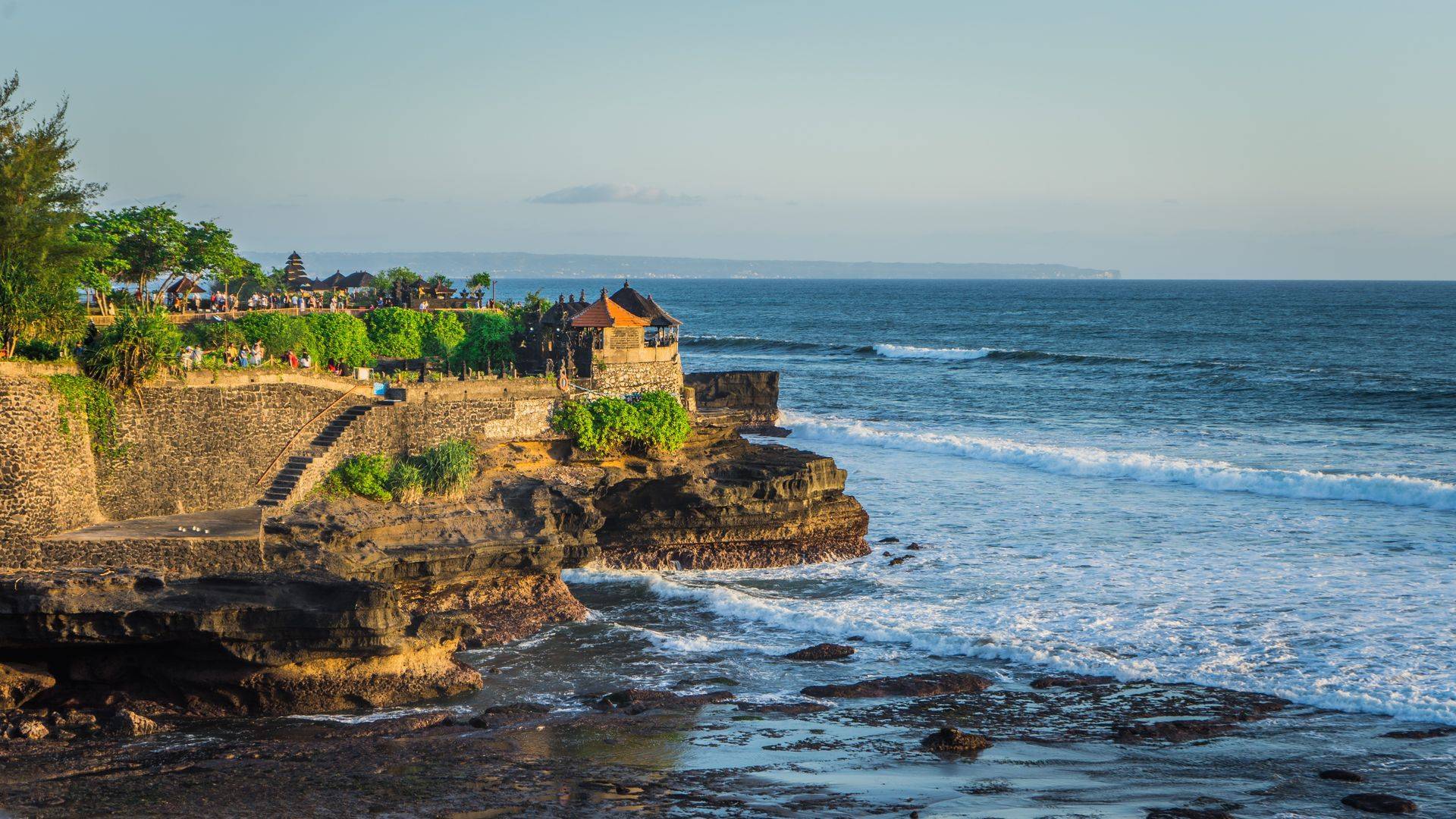
Bali's cultural landmarks, from Tanah Lot to the island's temple architecture, remain central to its appeal for second-home buyers.
Key Risks for Foreign Buyers
- Agricultural land exposure: land classified as productive rice field (LP2B/Green Zone) carries the highest current enforcement risk under Perda 4/2026 — verify zoning before committing to any purchase, particularly in Tabanan and Gianyar.
- Legacy nominee structures: any property still marketed informally as "freehold" through a nominee holder should be treated as high-risk pending independent legal review, regardless of how long the arrangement has been in place.
- Rental licensing: the compliant route for renting out a property now depends on when and how a licence was obtained and at what scale — the position has genuinely tightened since May 2026, and should be confirmed with a consultant before you buy, not after.
- HGB renewal timelines: a lapsed HGB title reverts to the state and must be reapplied for from scratch — mark renewal dates twelve months out, not six.
- Currency and tax planning: non-resident rental income is subject to withholding tax, and returns should always be modelled net of management, licensing and maintenance costs rather than on advertised gross yields alone.
Featured Bali Properties
Nine current Polarius listings across Bali, shown in ascending order of asking price. Tenure is noted for each; several of the freehold (HGB-backed) properties below can also be structured as leasehold on request.

Rustic Family Villa, Pererenan
Tumbak Bayuh, Canggu
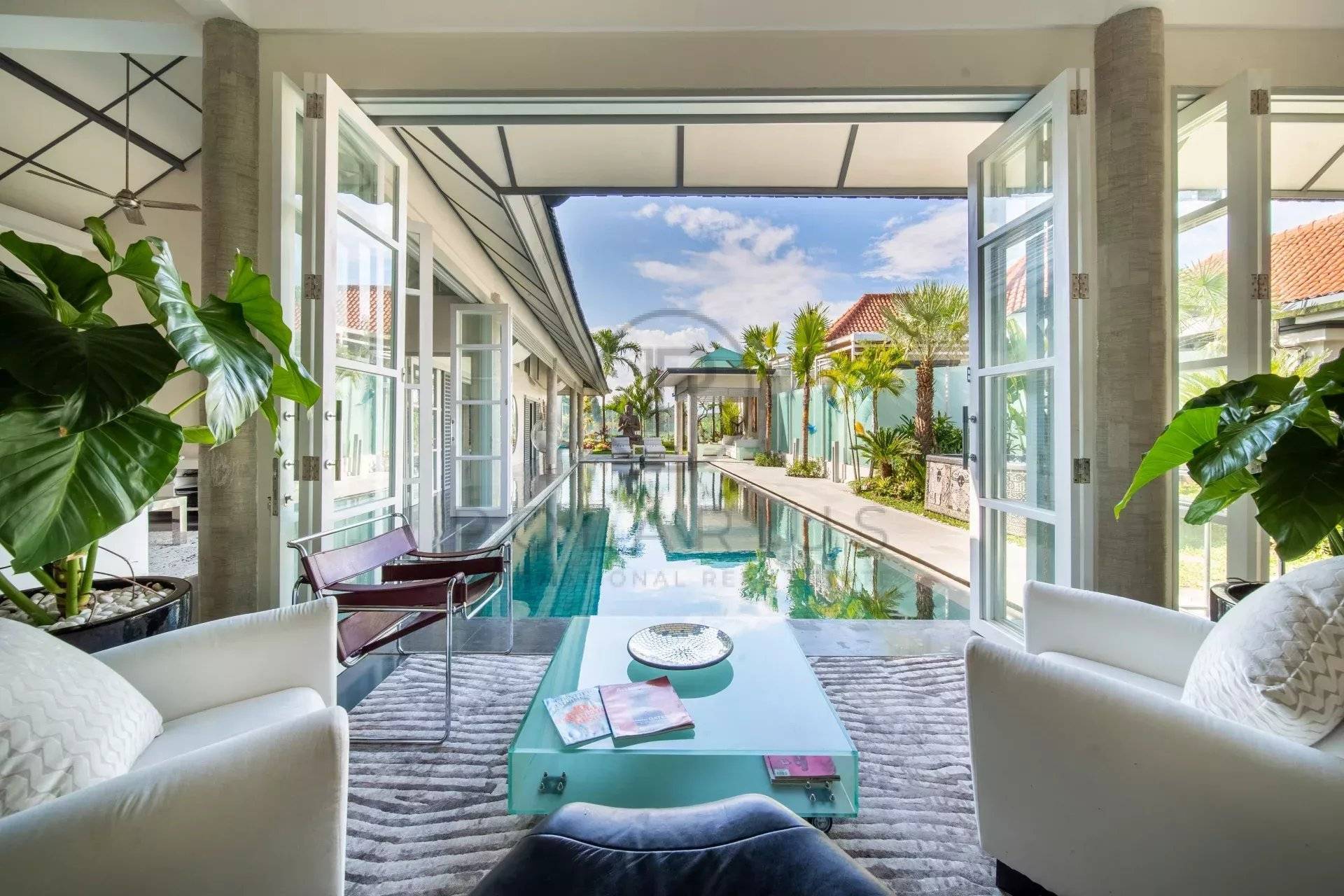
Stunning Beachside Villa, Sanur
Sanur

Modern Tropical Sanctuary, Munggu
Munggu, Badung
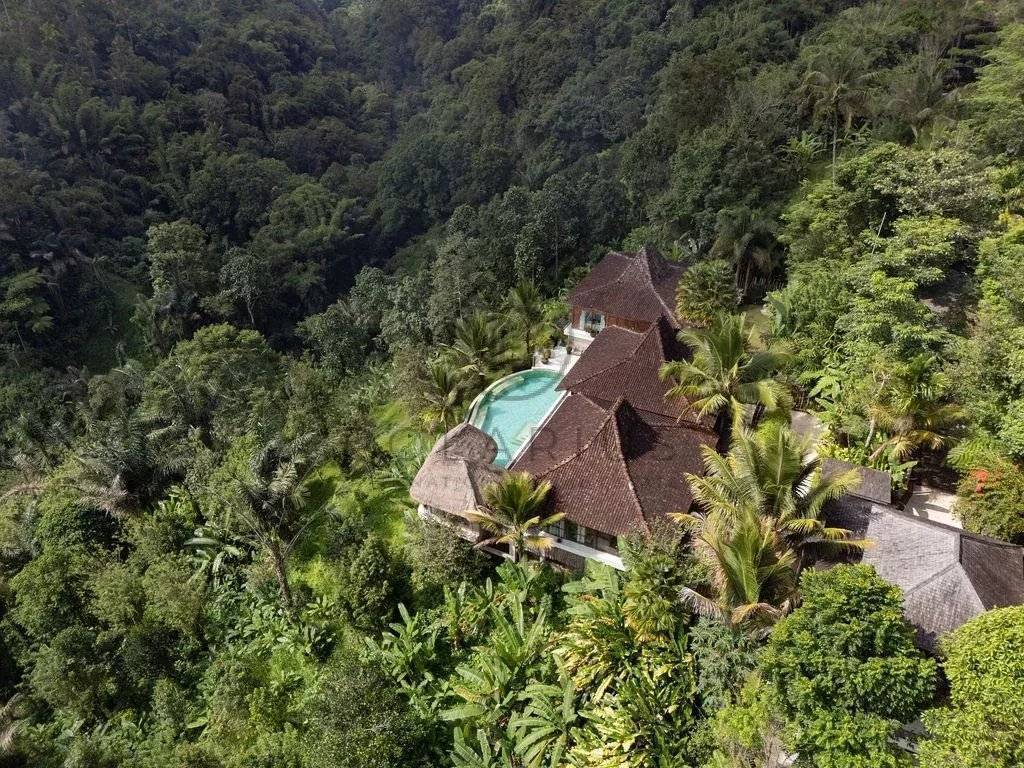
Heritage Joglo Estate, Payangan
Near Ubud

Ocean-View Architectural Villa, Uluwatu
Uluwatu, Bukit Peninsula

Freehold Villa, Gianyar
Gianyar

Majestic Hilltop Estate, Goa Gong
Badung

Direct Beachfront Villa, Candi Dasa
Candi Dasa

Mega Beachfront Estate, Tabanan
Tabanan
For an exclusive look at Bali's finest properties, click here.
Sources and References
- Government of Indonesia, Basic Agrarian Law (Undang-Undang Pokok Agraria) No. 5 of 1960, Articles 21 and 26(2).
- Government Regulation (Peraturan Pemerintah) No. 18 of 2021 on Land Management Rights, Land Rights, Apartment Units and Land Registration — 80-year Hak Pakai/HGB tenure structure.
- Government of Indonesia, Law No. 18 of 2025 (Third Amendment to the Tourism Law), enacted 29 October 2025.
- Investment Coordinating Board (BKPM) Regulation No. 5 of 2025 on PT PMA minimum paid-up capital requirements.
- Bali Provincial Government, Regional Regulation (Peraturan Daerah) No. 4 of 2026 on the Control of Productive Land Conversion and the Prohibition of Nominee Land Ownership, signed by Governor I Wayan Koster, 24 February 2026.
- Governor of Bali, Letter No. B.27.000/642/PM/DPMPTSP, 28 January 2026, on the restriction of new PT PMA licensing across designated business categories in Bali Province.
- BPS-Statistics Indonesia, Bali Province, "Tourism Overview of Bali Province, December 2025," released 2 February 2026.
- ANTARA News, "Bali's foreign tourist arrivals rise nearly 10 pct in 2025, BPS says," 2026.
- PP 23 of 2023 establishing the Kura Kura Bali Special Economic Zone, Serangan Island.
This article summarises publicly available Indonesian legal and statistical sources for general information purposes, including detail on business-licensing changes that was still settling at the time of writing. It is not legal, tax or investment advice. Foreign buyers should always obtain independent legal counsel from an Indonesia-qualified notary (PPAT) or lawyer before entering into any land or property transaction.
Structure Your Bali Purchase Correctly, First Time
Whether you're weighing HGB against leasehold, exploring a PT PMA structure, or reviewing an existing arrangement in light of the 2026 changes, our team can connect you with the right on-the-ground legal and notarial partners.