Most Prime Ministers arrive in Downing Street from a Westminster department. Andy Burnham arrived from a building site. On 20 July 2026 he was sworn in as Prime Minister of the United Kingdom, having stood down as Mayor of Greater Manchester weeks earlier to enter Parliament as MP for Makerfield — and he brings with him something rarer than a manifesto: a nine-year, on-the-ground record of what regeneration actually looks like when it works, written into a Manchester property market that has outpaced the national average as a result.
For anyone with a stake in that market, understanding what was built under Burnham's mayoralty — and why — has suddenly become a great deal more relevant than a piece of local history.
The Manchester Record
Burnham was elected Mayor of Greater Manchester in May 2017 and re-elected twice, most recently in 2024 with 63% of the vote. Over that period, Greater Manchester's economy grew at roughly twice the UK's national rate, and the change is visible in the fabric of the city itself:
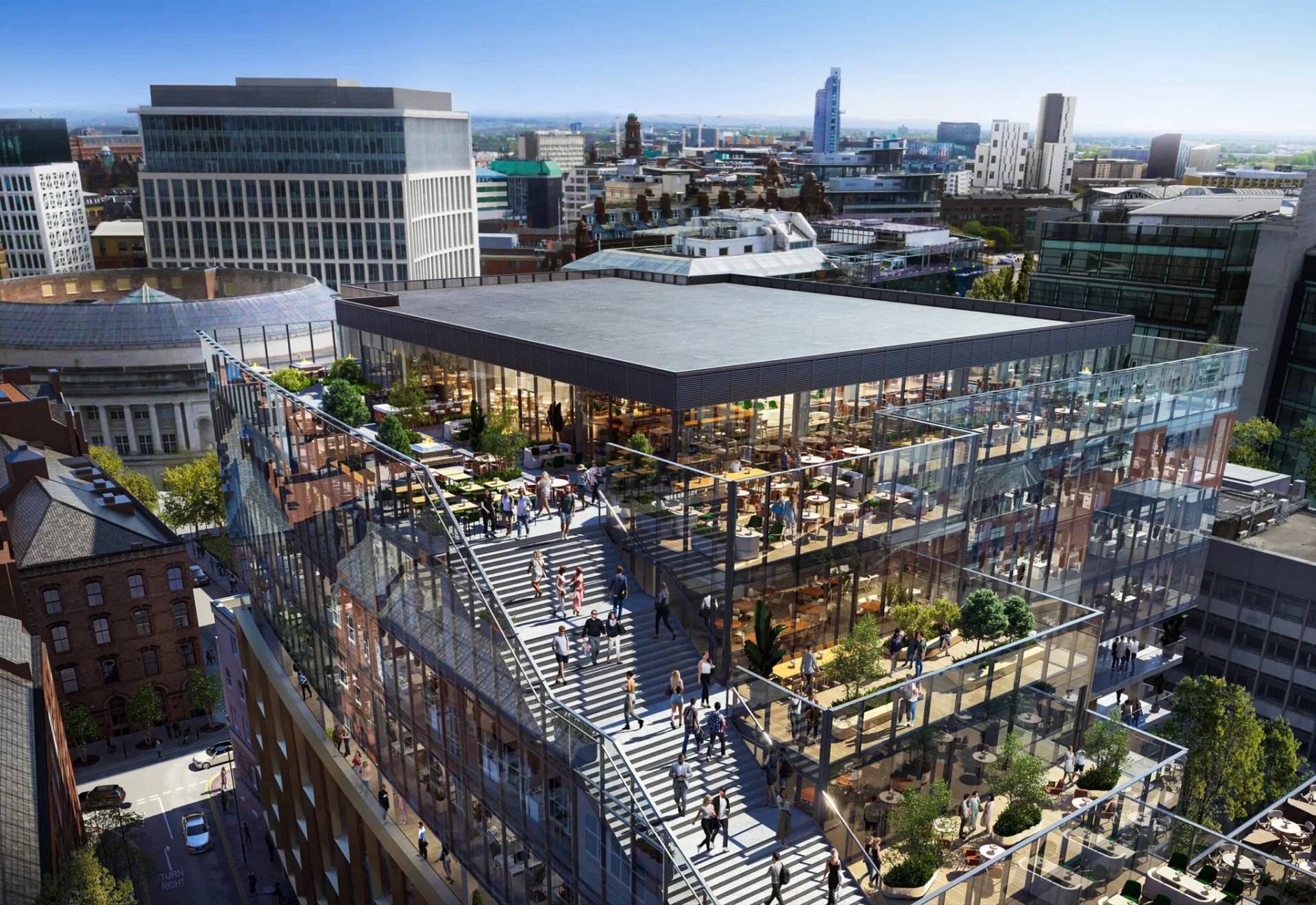
- Spinningfields, once a car park beside the River Irwell, is now Manchester's principal business district
- Ancoats, a derelict mill quarter a decade ago, has drawn several hundred million pounds of private housing investment and is now among the city's most sought-after residential postcodes
- NOMA, the St John's Quarter and Victoria North (formerly the Northern Gateway) represent a further multi-billion-pound pipeline of mixed-use regeneration, with Victoria North alone earmarked to deliver around 15,000 homes over the next two decades
- The Bee Network — London-style franchised buses brought under public control after years of resistance from private operators — and continued Metrolink tram expansion have underpinned the case for higher-density living close to the centre
- Aviva Studios (Factory International) opened in 2023 as a cultural anchor for the wider St John's Quarter regeneration
JLL forecasts cumulative Manchester property price growth of around 19% between 2024 and 2028 — second only to Birmingham among major UK cities — while new-build values in the prime central pockets (Deansgate, Ancoats, Salford Quays) now sit at £400–£500 per square foot.
It is worth being even-handed here: the record is not spotless. Housing completions lagged for much of Burnham's tenure before a 2023 devolution deal unlocked meaningful brownfield funding, and rough sleeping in Greater Manchester has risen for four consecutive years despite flagship schemes like Housing First. The lesson from Manchester is not that regeneration is easy or complete — it's that sustained, decades-long partnership between public investment and private capital reliably moves a market, even if it moves unevenly.
Why It Worked
Three features of the Manchester approach stand out, and they matter because Burnham has now said he intends to apply the same logic nationally:
- Long time horizons. The strategy predates Burnham himself — much of the groundwork was laid by Manchester City Council's Richard Leese and Howard Bernstein from the mid-1990s onward. Regeneration compounds; it does not arrive in a single term.
- Devolved control over transport and planning. Greater Manchester's mayoral powers over transport, skills and regeneration allowed decisions to be made locally rather than routed through Whitehall — something Burnham has argued, in his book "Head North" with Liverpool's Steve Rotheram, structurally disadvantages the English regions.
- Private capital following public commitment. Once transport and public realm investment de-risked an area, developer capital followed at scale — this is the mechanism behind Spinningfields, Ancoats and NOMA alike.
What This Means for Manchester Property Now
For buyers already considering Manchester, the practical read-through is continuity rather than disruption. The Trailblazer devolution deal, the Victoria North pipeline and the transport investment already committed do not depend on who holds the mayoralty — a successor will be elected to complete Burnham's current term, and the underlying planning and infrastructure commitments remain in place. If anything, having the architect of this strategy now in Downing Street strengthens the likelihood of continued central government backing for the projects already under way.
For international buyers, Manchester's proposition remains: strong rental yields (averaging around 6.6% city-wide, higher still in student-heavy postcodes), sustained inward corporate investment from the likes of Amazon, Google and AstraZeneca, and a still-meaningful discount to London on a per-square-foot basis — a contrast we explored in our recent analysis of the London prime property market. Polarius currently represents a select range of Manchester apartments for buyers looking to enter this market.
Can the Blueprint Travel to Other UK Cities?
This is the question Burnham himself is now being asked at national level, not just by property analysts. His "Manchesterism" speech in June 2026 and the "Head North" agenda he has set out with Rotheram both argue explicitly that the Manchester model — devolved power, patient public investment, transport-led regeneration — should be extended to other post-industrial English cities and towns, not just repeated in the largest conurbations.
Early signals of the approach becoming policy rather than rhetoric include proposed mayoral development vehicles for towns such as Bolton, Leigh and Middleton, and the framing of a wider "regional regeneration" push as a first-term priority in office. Reuters has reported that reversing decades of hollowed-out town centres — using public money to pump-prime housing and transport ahead of private investment — is expected to be a defining theme of his premiership.
Whether this scales nationally is genuinely open. Manchester's transformation took the better part of thirty years, survived several changes of national government, and relied on a specific combination of scale, existing institutional infrastructure and long-tenured local leadership that not every city currently has in place. Cities like Birmingham, Leeds and Liverpool each have elements of that mix already — devolved mayoral powers, live regeneration masterplans, transport investment in progress — but none has yet compounded them over as long a period as Greater Manchester.
For property investors, the practical implication is to watch the same three signals that made Manchester work: which cities are getting genuine devolved transport and planning control, where public infrastructure spend is landing first, and where private capital is following it. Those are usually the earliest, and most reliable, indicators of where the next decade of UK regional property growth will concentrate.