26 July 2026

Manchesterism: Andy Burnham's Manchester Property Blueprint. Can It Work Elsewhere?

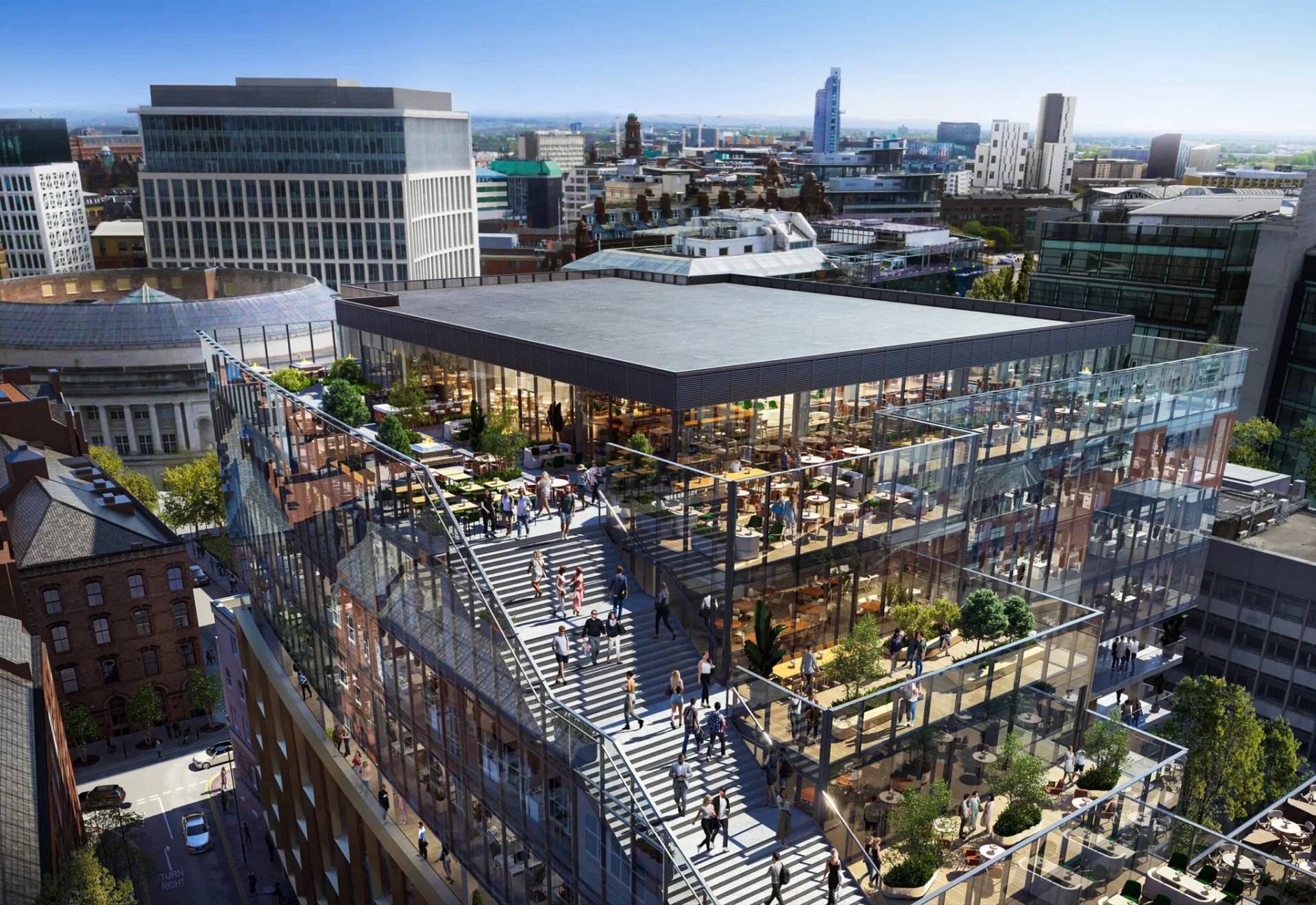
Aerial view of a stepped, terraced Manchester development with glass-fronted floors, landscaped rooftop terraces and outdoor dining, overlooking the city skyline

Most Prime Ministers arrive in Downing Street from a Westminster department. Andy Burnham arrived from a building site. On 20 July 2026 he was sworn in as Prime Minister of the United Kingdom, having stood down as Mayor of Greater Manchester weeks earlier to enter Parliament as MP for Makerfield — and he brings with him something rarer than a manifesto: a nine-year, on-the-ground record of what regeneration actually looks like when it works, written into a Manchester property market that has outpaced the national average as a result.

For anyone with a stake in that market, understanding what was built under Burnham's mayoralty — and why — has suddenly become a great deal more relevant than a piece of local history.

The Manchester Record

Burnham was elected Mayor of Greater Manchester in May 2017 and re-elected twice, most recently in 2024 with 63% of the vote. Over that period, Greater Manchester's economy grew at roughly twice the UK's national rate, and the change is visible in the fabric of the city itself:

  • Spinningfields, once a car park beside the River Irwell, is now Manchester's principal business district
  • Ancoats, a derelict mill quarter a decade ago, has drawn several hundred million pounds of private housing investment and is now among the city's most sought-after residential postcodes
  • NOMA, the St John's Quarter and Victoria North (formerly the Northern Gateway) represent a further multi-billion-pound pipeline of mixed-use regeneration, with Victoria North alone earmarked to deliver around 15,000 homes over the next two decades
  • The Bee Network — London-style franchised buses brought under public control after years of resistance from private operators — and continued Metrolink tram expansion have underpinned the case for higher-density living close to the centre
  • Aviva Studios (Factory International) opened in 2023 as a cultural anchor for the wider St John's Quarter regeneration

JLL forecasts cumulative Manchester property price growth of around 19% between 2024 and 2028 — second only to Birmingham among major UK cities — while new-build values in the prime central pockets (Deansgate, Ancoats, Salford Quays) now sit at £400–£500 per square foot.

It is worth being even-handed here: the record is not spotless. Housing completions lagged for much of Burnham's tenure before a 2023 devolution deal unlocked meaningful brownfield funding, and rough sleeping in Greater Manchester has risen for four consecutive years despite flagship schemes like Housing First. The lesson from Manchester is not that regeneration is easy or complete — it's that sustained, decades-long partnership between public investment and private capital reliably moves a market, even if it moves unevenly.

Why It Worked

Three features of the Manchester approach stand out, and they matter because Burnham has now said he intends to apply the same logic nationally:

  1. Long time horizons. The strategy predates Burnham himself — much of the groundwork was laid by Manchester City Council's Richard Leese and Howard Bernstein from the mid-1990s onward. Regeneration compounds; it does not arrive in a single term.
  2. Devolved control over transport and planning. Greater Manchester's mayoral powers over transport, skills and regeneration allowed decisions to be made locally rather than routed through Whitehall — something Burnham has argued, in his book "Head North" with Liverpool's Steve Rotheram, structurally disadvantages the English regions.
  3. Private capital following public commitment. Once transport and public realm investment de-risked an area, developer capital followed at scale — this is the mechanism behind Spinningfields, Ancoats and NOMA alike.

What This Means for Manchester Property Now

For buyers already considering Manchester, the practical read-through is continuity rather than disruption. The Trailblazer devolution deal, the Victoria North pipeline and the transport investment already committed do not depend on who holds the mayoralty — a successor will be elected to complete Burnham's current term, and the underlying planning and infrastructure commitments remain in place. If anything, having the architect of this strategy now in Downing Street strengthens the likelihood of continued central government backing for the projects already under way.

For international buyers, Manchester's proposition remains: strong rental yields (averaging around 6.6% city-wide, higher still in student-heavy postcodes), sustained inward corporate investment from the likes of Amazon, Google and AstraZeneca, and a still-meaningful discount to London on a per-square-foot basis — a contrast we explored in our recent analysis of the London prime property market. Polarius currently represents a select range of Manchester apartments for buyers looking to enter this market.

Can the Blueprint Travel to Other UK Cities?

This is the question Burnham himself is now being asked at national level, not just by property analysts. His "Manchesterism" speech in June 2026 and the "Head North" agenda he has set out with Rotheram both argue explicitly that the Manchester model — devolved power, patient public investment, transport-led regeneration — should be extended to other post-industrial English cities and towns, not just repeated in the largest conurbations.

Early signals of the approach becoming policy rather than rhetoric include proposed mayoral development vehicles for towns such as Bolton, Leigh and Middleton, and the framing of a wider "regional regeneration" push as a first-term priority in office. Reuters has reported that reversing decades of hollowed-out town centres — using public money to pump-prime housing and transport ahead of private investment — is expected to be a defining theme of his premiership.

Whether this scales nationally is genuinely open. Manchester's transformation took the better part of thirty years, survived several changes of national government, and relied on a specific combination of scale, existing institutional infrastructure and long-tenured local leadership that not every city currently has in place. Cities like Birmingham, Leeds and Liverpool each have elements of that mix already — devolved mayoral powers, live regeneration masterplans, transport investment in progress — but none has yet compounded them over as long a period as Greater Manchester.

For property investors, the practical implication is to watch the same three signals that made Manchester work: which cities are getting genuine devolved transport and planning control, where public infrastructure spend is landing first, and where private capital is following it. Those are usually the earliest, and most reliable, indicators of where the next decade of UK regional property growth will concentrate.

Back

The latest press articles

  • Luxury villa with private pool and sea views on the French Riviera — renting vs buying on the Côte d'Azur, Polarius Market Insights 2026

    Renting vs Buying on the French Riviera: The Summer Calculation

    Every summer on the Côte d'Azur ends the same way for a certain kind of renter: with the question of what it would actually cost to own. This analysis sets out the full financial picture — acquisition costs, annual running costs, the French notary fee structure, and the break-even point at which buying a property on the French Riviera becomes the sharper decision. If you are spending €80,000 or more per year on Riviera rentals, the numbers here are for you.

    Read more
  • Chateau du Cap exceptional luxury residential estate for sale in Cap d'Antibes France

    What Is a Family Office? Inside the Private Wealth Real Estate Shift

    Family offices control trillions in private wealth globally—and real estate sits at the absolute heart of how they deploy it. 

    While traditional buyers rely on public listings, these ultra-high-net-worth structures operate with institutional discipline and an uncompromising preference for off-market access. 

    For anyone navigating the upper echelons of the luxury property market, understanding how family offices are quietly rewriting the rules of acquisition is no longer optional.

    Read more
  • Aerial view of a private luxury villa with an infinity pool overlooking the Pampelonne coastline near Saint-Tropez, surrounded by pine trees and Mediterranean scrubland, on a clear summer day.

    Saint-Tropez Villa Rentals 2026: Prices, Availability & Insider Guide

    Saint-Tropez in summer 2026 is a landlord’s market - and it has been for some time.

    Peak-week villa rates have climbed 12–18% since 2024, the best properties are booked nearly a year in advance, and a growing share of trophy lets never appear on any public platform.

    For those still planning a French Riviera summer, the window is narrow but not closed. This guide covers where prices stand, which zones still offer availability, and what the most experienced renters do to secure exceptional properties when the obvious options are gone.

    Read more
  • Two luxury sports cars on a waterfront street in Monte Carlo, with upscale shops, high-rise buildings, and green hills in the background.

    Dubai vs Monaco - Where Billionaires Buy in 2026

    Two zero-tax jurisdictions. Two fundamentally different investment theses. In 2026, the choice between Dubai and Monaco has become more nuanced — and more consequential — than at any point in the past decade. Polarius analyses both markets in depth.

    Read more
  • Rolling hills and stone estate in Le Marche, Italy — luxury property market insight | Polarius Real Estate

    Le Marche: The Last Undervalued Luxury Market in Italy

    While Tuscany and the Amalfi Coast have long captured the imagination of international buyers, a quieter story has been unfolding further up Italy's Adriatic coast.

    Le Marche - five provinces of medieval hilltowns, pristine coastline and UNESCO heritage - offers everything its more famous neighbours do, at prices that remain, by any European luxury standard, startlingly undervalued.

    In 2026, with Italy's flat tax regime now attracting serious ultra-high-net-worth attention and national property prices rising at their fastest rate in a decade, the window for early-mover advantage is narrowing. This is the case for Le Marche.

    Read more
  • Belle Époque luxury villa overlooking the Mediterranean in Hyères on the French Riviera

    Why Hyères Is Quietly Becoming the French Riviera’s Next Luxury Escape

    For decades, the narrative of Riviera luxury has revolved around the same names: Saint-Tropez, Cannes, Cap-Ferrat and Monaco. Yet a subtle shift is beginning to emerge among high-net-worth travellers and second-home buyers searching for something increasingly rare on the Côte d’Azur: privacy, authenticity and space.

    That shift is bringing new attention to Hyères.

    Long appreciated by sailors, artists, nature lovers and discerning French families, Hyères has historically remained outside the international luxury spotlight that transformed other Riviera destinations into global status symbols. Today, however, changing travel behaviour and evolving definitions of luxury are positioning this Mediterranean town as one of the most interesting emerging lifestyle destinations in Southern Europe.

    Read more
  • London skyline representing prime central London property market trends and 2026 real estate repricing

    London Prime Property Market 2026: Are Prices Finally at a Floor?

    After several years of volatility, London is no longer a momentum-driven market. It is a pricing-driven one. For much of the past decade, prime London property was defined by competition, urgency, and upward pressure on values. 

    Today, the dynamics are markedly different. Activity has slowed, sentiment has softened, and pricing has adjusted.

    Yet for experienced investors, this is precisely where opportunity begins to emerge.

    Read more
  • Mykonos luxury villa with infinity pool overlooking the Aegean Sea alongside an Ibiza villa with panoramic Mediterranean sea views — Polarius International Real Estate Summer 2026 guide

    Mykonos vs Ibiza? The Definitive Luxury Villa Guide for Summer 2026

    Mykonos or Ibiza? Two icons of Mediterranean luxury, two entirely different summer experiences — and very different price points. Our 2026 guide compares villa rental costs, atmosphere, guest profiles and availability across both islands, with a curated selection of exceptional properties for private rental this summer

    Read more
  • Luxury Bali villa resort with infinity pool and tropical hillside landscape in daylight, highlighting real estate investment opportunities for international buyers in Bali 2026

    Bali Real Estate Market Insights 2026

    An in-depth look at the Bali real estate market in 2026, covering pricing, yields, zoning, compliance, tourism demand and the areas drawing the strongest investor interest. From Uluwatu and Pandawa to Canggu, Seminyak and Ubud, this guide outlines the key opportunities and risks for international buyers considering Bali property.

    Read more
  • Panoramic sea view from an off-market penthouse in Cap-d’Ail on the Côte d’Azur

    Côte d'Azur Property Market 2026: Where Luxury Buyers Are Looking Beyond Cannes and Monaco

    The Côte d’Azur luxury market continues to show resilience in 2026, with growing demand for rare off-market homes in prime locations close to Monaco. Buyers are increasingly focused on panoramic sea views, privacy, outdoor living space and turnkey properties in sought-after destinations such as Cap-d’Ail and Villefranche-sur-Mer.

    Read more

This site is protected by reCAPTCHA and the Google Privacy Policy and Terms of Service apply.